Official websites use .gov
A .gov website belongs to an official government organization in the United States.

Secure .gov websites use HTTPS
A lock (
) or https:// means you’ve safely connected to the .gov website. Share sensitive information only on official, secure websites.


Blog Search

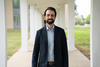
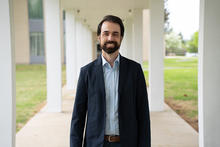
Corey Stambaugh
Corey Stambaugh is the chief of staff of the Physical Measurement Laboratory (PML) within the National Institute of Standards and Technology (NIST). He was previously the senior policy advisor and industrial liaison for the National Quantum Coordination Office at the White House Office of Science and Technology Policy (OSTP) and co-chair of several National Science and Technology Council (NSTC) interagency working groups. Stambaugh earned a Ph.D. in physics from the University of Florida and B.Sc. in physics with a minor in computer science from the Ohio State University. He is also an adjunct professor of physics at Montgomery College.



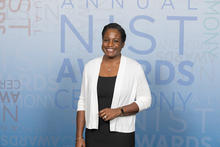
Melissa Taylor
Melissa Taylor is a senior forensic science research manager within the Special Programs Office at the National Institute of Standards and Technology. Her work focuses primarily on integrating human-factors principles into forensic sciences, process mapping, understanding expert decision-making, and developing requirements for adopting trustworthy and responsible AI systems. She has 20 years in the forensic science industry, including holding positions with Booz Allen Hamilton and Lockheed Martin and as a consultant to the National Institute of Justice. Ms. Taylor is the study director for the Expert Working Group Series on Human Factors in Forensic Sciences and program manager of the National Artificial Intelligence Advisory Committee.


Scott Davis
Dr. Scott Davis is a physics-trained entrepreneur. He co-founded Vescent to develop photonic-based nonmechanical laser beam steerers. Dr. Davis has over 50 papers, two book chapters, and more than 25 patents pending or issued. He obtained his Ph.D. from JILA under the tutelage of Professor David Nesbitt and served as an NRC postdoc in the NIST laboratories of David Plusquellic. He serves on the board of the Quantum Economic Development Consortium (QED-C) and is a leader in the quantum tech hub Elevate Quantum.

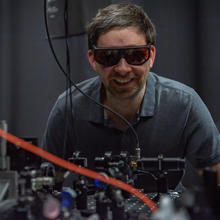
Krister Shalm
Krister Shalm is an experimental quantum physicist working at the National Institute of Standards and Technology since 2012. His research focuses on studying the fundamental properties of light to develop new quantum technologies. He received his Ph.D. in physics from the University of Toronto in 2010 and subsequently performed postdoctoral work at the Institute for Quantum Computing in Waterloo, Canada. Krister's work on entanglement has received widespread international recognition. When Krister isn't in the lab or sharing his love of science, he can be found swing dancing.


Krister Shalm
Krister Shalm is an experimental quantum physicist working at the National Institute of Standards and Technology since 2012. His research focuses on studying the fundamental properties of light to develop new quantum technologies. He received his Ph.D. in physics from the University of Toronto in 2010 and subsequently performed postdoctoral work at the Institute for Quantum Computing in Waterloo, Canada. Krister's work on entanglement has received widespread international recognition. When Krister isn't in the lab or sharing his love of science, he can be found swing dancing.
Alexander Kramida
Alexander Kramida is interested in the analysis of spectra of neutral and ionized atoms and is active in the critical compilation of atomic spectral data for NIST's atomic spectroscopy databases. He is currently involved in evaluation of energy levels, wavelengths, and transition probabilities in several spectra of atoms and atomic ions and critical evaluation of experimental and theoretical ionization energies of all stages of ionization of all chemical elements. Utilizing his knowledge of computer programming, he assists in support of the online databases on atomic spectra.