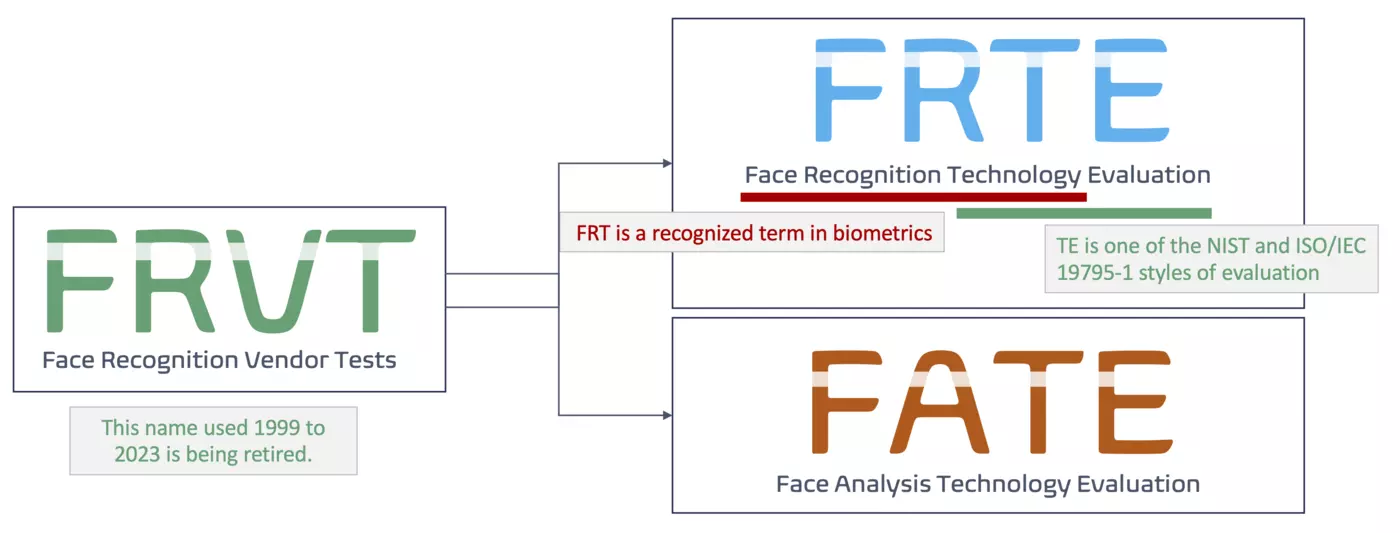
NIST has published NISTIR 8311 - Ongoing FRVT Part 6A: Face recognition accuracy with face masks using pre-COVID-19 algorithms, the first out of a series of reports aimed at quantifying face recognition accuracy for people wearing masks. The initial approach was to apply masks to faces digitally (i.e., using software to apply a synthetic mask), which allowed us to leverage large datasets that we already have. The report documents results for 89 one-to-one verification algorithms that were already submitted to FRVT 1:1 prior to mid-March 2020. This report is intended to support end-users to understand how a pre-pandemic algorithm might be affected by the arrival of substantial number of subjects wearing face masks. The next report will document accuracy values for more recent algorithms, some developed with capabilities for recognition of masked faces. For more information, visit the FRVT Face Mask Effects webpage.
A new FRVT report released as NISTIR 8280 - FRVT Part 3: Demographic Effects on December 19th, 2019, describes and quantifies demographic differentials for contemporary face recognition algorithms. NIST has conducted tests to quantify demographic differences for nearly 200 face recognition algorithms from nearly 100 developers, using four collections of photographs with more than 18 million images of more than 8 million people. Using both one-to-one verification and one-to-many identification algorithms submitted to NIST, the report found empirical evidence for the existence of a wide range of accuracy across demographic differences in the majority of the current face recognition algorithms that were evaluated.
Latest Report [2020-10-09]
API | Participation Agreement
Status: Open
Next Report: November 2020
Latest Report [2020-03-24]
API | Participation Agreement
Status: Open
Next Report: TBD
Latest Report [2020-07-24]
API | Participation Agreement
Status: Open
Next Report: TBD
Draft Report [2020-07-24]
API | Concept Document
Participation Agreement
Status: Open