U.S. flag

An official website of the United States government

Official websites use .gov
A .gov website belongs to an official government organization in the United States.

Secure .gov websites use HTTPS
A lock ( ) or https:// means you’ve safely connected to the .gov website. Share sensitive information only on official, secure websites.

Patents

Searches Patent Title, Abstract, Body, Technology Type, and NIST Inventors
Displaying 1 - 5 of 5
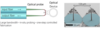
TPOP optical probe.

A Probe for Rapid and Flexible Evaluation of Photonic Integrated Circuits (PICs)

NIST Inventors
Kartik Srinivasan
The Tapered Polymer Optical Probe (TPOP) is a state-of-the-art light probe that collects light from very small, localized areas. It is a small loop of a thin plastic "string" that collects light from a localized area near the loop into a fiber optic for signal testing. The probe is made of a durable
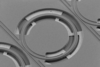
Scanning electron microscopy image showing electrodes placed underneath an air clad microresonator.

Integrated Optical Phase Shifter Using Buried Electrodes

NIST Inventors
Daron Westly , Gregory Moille and Kartik Srinivasan
We demonstrate the use of a buried heater layout for thermo-optic tuning of integrated photonic devices. Our method places heater electrodes underneath the photonic device layer, rather than the traditional approaches of placing electrodes on the sides of air-clad devices or on top of fully clad
An electro-optic frequency comb is spectrally translated via nanophotonics.

Nanophotonic Spectral Translation of Electro-Optic Frequency Combs

NIST Inventors
Jordan Stone and Kartik Srinivasan
The technology consists of an apparatus and process using an electro-optic frequency comb as the pump laser, used with a nonlinear microresonator to output one or more spectrally translated frequency combs in spectroscopy.

Advanced Nanofabrication Process for High-Precision Nanodevices

NIST Inventors
Samuel M. Stavis and Michael Gaitan
This invention introduces a nanofabrication process that enables the creation of highly complex and precise nanodevices. It enhances the ability to manipulate biomolecules and other microscopic structures. The process improves dimensional control, allowing for more intricate designs. It also
Was this page helpful?