U.S. flag

An official website of the United States government

Official websites use .gov
A .gov website belongs to an official government organization in the United States.

Secure .gov websites use HTTPS
A lock ( ) or https:// means you’ve safely connected to the .gov website. Share sensitive information only on official, secure websites.

Patents

Searches Patent Title, Abstract, Body, Technology Type, and NIST Inventors
Displaying 1 - 4 of 4
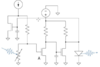
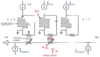
Diagram showing the circuit for resetting the Spectral Power Distribution (SPD) after the Light Emitting Diode (LED) has emitted a photonic pulse.

Superconducting Opto-Electronic Transmitter Circuit

NIST Inventors
Sonia Buckley and Adam McCaughan
This invention describes a family of circuits that receive an input current or voltage pulse when a superconducting element has been driven above threshold, producing an amplified current or voltage pulse to drive a light source, and reset to the resting state after light has been generated.
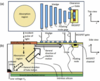
The device reprinted from Z. H. Levine et al., Sensors 25 (17) 5470 (2025).

Metrological Photon Counter and Metrologically Counting Photons at Room Temperature

NIST Inventors
Zachary H. Levine , Neil M. Zimmerman , Alan Migdall and Joshua Bienfang
A gated few-photon pulse enters the device and is converted to electron-hole pairs through photoabsorption. Electric fields lead to the separation of the electron-hole pairs. The electrons are taken to an electronically defined well near a field-effect transistor. (The holes are discarded through a
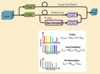
Diagram of the dual optical frequency comb spectrometer consisting of a single laser that is split into local oscillator, reference and probe legs to down-convert, interleave and normalize gas sample absorption signals.

Variable-Frequency Optical Combs, Heterodyne Sensor, and Process for Performing Spectroscopy

NIST Inventors
David F. Plusquellic , David Long , Kevin O Douglass , Joseph T. Hodges and Adam J. Fleisher
This invention uses lasers and modulators to create special light waves called “optical frequency combs” that can scan multiple chemical features instantly. These combs detect chemicals by analyzing how light changes as it interacts with different substances. It’s fast, accurate, and doesn’t need
Was this page helpful?