U.S. flag

An official website of the United States government

Official websites use .gov
A .gov website belongs to an official government organization in the United States.

Secure .gov websites use HTTPS
A lock ( ) or https:// means you’ve safely connected to the .gov website. Share sensitive information only on official, secure websites.

Patents

Searches Patent Title, Abstract, Body, Technology Type, and NIST Inventors
Displaying 26 - 28 of 28
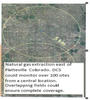
Image of an map view with the text "Natural gas extraction east of Platteville Colorado. DCS could monitor over 100 sites from central location. Overlapping fields could ensure complete coverage".

Hub and Spoke System for Detecting and Locating Gas Leaks

NIST Inventors
Greg Rieker , Ian Coddington , Kuldeep Prasad and Anna Karion
A system for detecting gas leaks and determining their location and size. A data gathering portion of the system utilizes a hub and spoke configuration to collect path-integrated spectroscopic data over multiple open paths around an area. A processing portion of the system applies a high-resolution
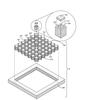
A line drawing showing the entire structure, which includes the resonator and supporting substrate.

Reticulated Resonator, Process for Making and Use of Same

NIST Inventors
Raymond Simmonds , Katarina Cicak , Cindy Regal and Thomas Purdy
Mechanical resonators are widely used in wireless receivers, biosensors, and timing and frequency control. Besides industry, in recent years in academia there is also considerable interest for ultrahigh precision sensing and fundamental science. A mechanical resonator with the following three
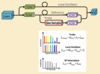
Diagram of the dual optical frequency comb spectrometer consisting of a single laser that is split into local oscillator, reference and probe legs to down-convert, interleave and normalize gas sample absorption signals.

Variable-Frequency Optical Combs, Heterodyne Sensor, and Process for Performing Spectroscopy

NIST Inventors
David F. Plusquellic , Kevin O Douglass and Adam J. Fleisher
This invention uses lasers and modulators to create special light waves called “optical frequency combs” that can scan multiple chemical features instantly. These combs detect chemicals by analyzing how light changes as it interacts with different substances. It’s fast, accurate, and doesn’t need
Was this page helpful?