

Official websites use .gov
A .gov website belongs to an official government organization in the United States.

Secure .gov websites use HTTPS
A lock (
) or https:// means you’ve safely connected to the .gov website. Share sensitive information only on official, secure websites.


Traction Lithium Battery Recovery
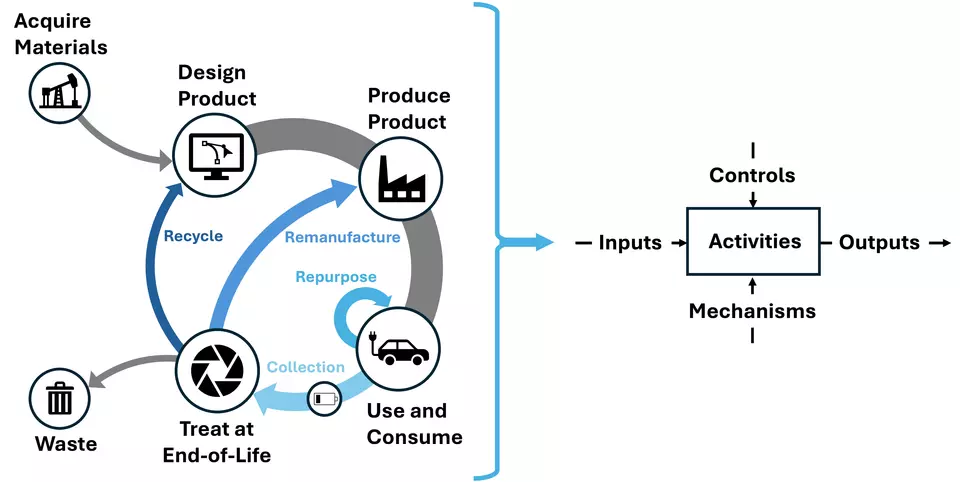
The Traction Lithium Battery Recovery (TLBR) Model is a reference model of the activities and systems involved in the recovery of a traction lithium-based battery (which includes batteries for electric vehicles, forklifts, electric buses, and more) within a circular economy. A traction battery is a “rechargeable energy storage device consisting of battery modules or cells, designed to supply power to propel electric drive systems in vehicles” (as defined by SAE J2289). These batteries rely on critical minerals and materials vulnerable to supply chain disruptions. Recovery strategies, including recycling, reduce reliance on virgin materials and bolster domestic inventories. The TLBR model provides a common point of reference that collates new technologies and research surrounding the emerging lithium battery recovery/recycling industry. The recovery pathways in this model include repurposing, remanufacturing, and recycling.
Using the IDEF0 functional modeling method, the reference model defines relevant inputs, outputs, controls, and mechanisms for each activity involved in recovering a traction lithium-based battery. It provides a baseline scenario relevant to stakeholders across the battery supply chain, including business strategists, material suppliers, designers, manufacturers, consumers, and recoverers/recyclers. The model is also available as downloadable files.
Users of the reference model can include researchers, original equipment manufacturers (OEMs) and their supply chains, interested consortia, and standards development bodies, among others. For example, the model can serve as a resource to:
- Identify data needs and considerations for improved battery recovery
- Identify areas within battery recovery that require further development of tools, measurement methods, or standards
- Plan for information tracking throughout a battery’s life cycle
- Determine possible avenues for battery end-of-life treatment
- Identify areas where resource recovery can be improved
- Discover new stakeholder communities
- Map technical standards development activities
- Identify opportunities for new collaborations and standards
The model will be updated periodically. If you have feedback or suggested updates, please send them to batteries [at] nist.gov (batteries[at]nist[dot]gov.)
Related Projects
Related Publications
Contact
-
(301) 975-4104
-
(301) 975-0651