

Official websites use .gov
A .gov website belongs to an official government organization in the United States.

Secure .gov websites use HTTPS
A lock (
) or https:// means you’ve safely connected to the .gov website. Share sensitive information only on official, secure websites.


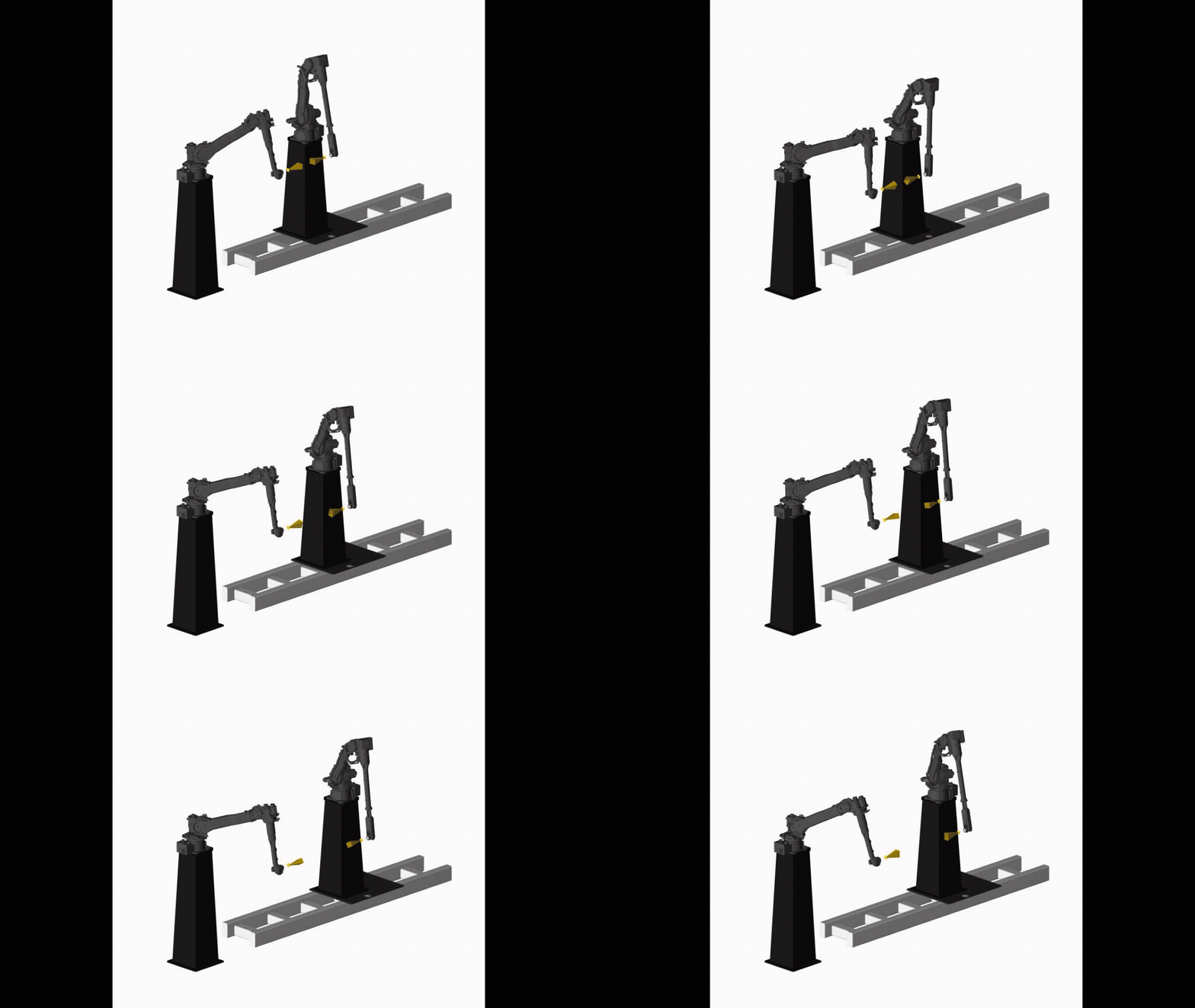
Standard gain horn (SGH) antennas are widely used as the industry standard for low-uncertainty antenna gain calibrations, much like a calibrated weight on a scale. However, many SGHs are needed in order to cover multiple frequency bands. Such is the case for the widely used frequency range of 1-18 GHz where the three-antenna gain extrapolation method requires a set of 20 reference antennas to conduct the calibration. A single dual-ridge horn antenna (DRHA) however, can cover the entire 1-18 GHz, but exhibits significant amounts of multipath reflections from the measurement chamber, raising the gain uncertainty to as much as 1-2 dB, many orders of magnitude worse than the ±0.07 dB uncertainty for NIST-calibrated SGH antennas. That uncertainty makes it harder for industry to determine antenna gain accurately, reducing the effectiveness of an otherwise highly efficient DRHA.
NIST’s Communications Technology Laboratory (CTL) is pleased to announce Low-Uncertainty Broadband Antenna Gain Calibrations, a NIST calibration service SKU63102S now available at shop.nist.gov that calibrates DRHAs with significantly lower uncertainty than what is typically associated with DRHAs. For example, this calibration service achieves a typical gain uncertainty of +/-0.07 dB for DRHAs in the 1-18 GHz range. Dr. Josh Gordon, Dr. Benjamin Moser, and their team in CTL’s RF Technology Division have created a solution to the problem of uncertainty in DRHA measurements, resulting in a new calibration service offered at shop.nist.gov. Using the dual-robot Large Antenna Positioning System (LAPS) in CTL’s Robotically Enhanced Antenna Laboratory for Metrology (REALM) facility, researchers use multirobot combined motion to move the antenna pairs to a set of kinematically calibrated poses within the chamber while keeping the two antennas accurately aligned along a linear gain-extrapolation path. This “stirs” echoes created when the antenna's beam strikes the anechoic foam walls in the room so they can be averaged out. The result: DRHA gain uncertainty is reduced to levels on par with SGH of about ±0.07 dB. The foundational work of this calibration technique has been recently published (see link below) and is available to readers.
There are multiple ways to engage with CTL about the Broadband Antenna Calibration:
- Request this calibration through shop.nist.gov
- Discuss long-term engagements, including calibrations outside the shop.nist.gov service, with Josh and team: Email josh.gordon [at] nist.gov (josh[dot]gordon[at]nist[dot]gov)
- Inquiries related to licensing for this technology can be directed to the NIST Technology Partnership Office: Email licensing [at] nist.gov (licensing[at]nist[dot]gov)
- Review the recent publication: https://www.nist.gov/publications/improved-broadband-antenna-gain-measurements-through-multipath-mitigation-using
Congratulations to Josh Gordon, Benjamin Moser, and the RF Technology Division team on developing this new technique and launching a new calibration service!