An official website of the United States government
Here’s how you know
Official websites use .gov
A .gov website belongs to an official government organization in the United States.
Secure .gov websites use HTTPS
A lock (
) or https:// means you’ve safely connected to the .gov website. Share sensitive information only on official, secure websites.

A single photon may not seem like much of a catch. But detecting photons one-by-one with near-perfect reliability is formidably difficult. It is also an...
One of the surprising predictions of quantum mechanics is that uncharged conductors can attract each other over small distances, even in empty space. While the...
The National Institute of Standards and Technology (NIST) has demonstrated a novel chip-scale instrument made of carbon nanotubes that may simplify absolute...
Communicating with light may soon get a lot easier, hints recent research* from the National Institute of Standards and Technology (NIST) and the University of...
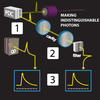
An international collaboration led by researchers from the NIST Center for Nanoscale Science and Technology has demonstrated the ability to make photons emitted...
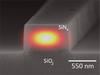
Researchers from the NIST Center for Nanoscale Science and Technology and Caltech have developed a new design platform for measuring and exploiting strong...
Scientists from a PML- Joint Quantum Institute (JQI)* group have devised and demonstrated a novel method** for making the most precise measurements to date of...
Any eventual quantum computer, no matter how it may be configured, will need a way to store and manipulate information in qubits – the quantum counterpart of a...
Researchers from the NIST Center for Nanoscale Science and Technology have developed on-chip optomechanical sensors for atomic force microscopy (AFM) that...
In yet another step toward the realization of a practical quantum computer, scientists working at Princeton and the Joint Quantum Institute (JQI) have shown how...
Researchers from the NIST Center for Nanoscale Science and Technology have demonstrated a low-noise device for changing the wavelength of light using...
Take that, sports cars! Physicists at the National Institute of Standards and Technology (NIST) can accelerate their beryllium ions from zero to 100 miles per...
Most devices that amplify light suffer from the same problem: making the image brighter also adds muddying distortion. Scientists working at the National...
In an important step towards more practical quantum information processing, researchers from the National Institute of Standards and Technology (NIST), the...
Quantum computers are still years away, but a trio of theorists has already figured out at least one talent they may have. According to the theorists, including...
Researchers at the National Institute of Standards and Technology (NIST) have developed a novel way of producing light pulses that are "superluminal"—in some...
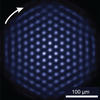
Physicists at the National Institute of Standards and Technology (NIST) have built a quantum simulator that can engineer interactions among hundreds of quantum...
During the week of February 6-10, 2012, some extremely weighty matters were in progress at NIST's non-magnetic facility, where PML researchers hosted an...
If quantum computers are ever to be realized, they likely will be made of different types of parts that will need to share information with one another, just...
Thanks to advances in experimental design, physicists at the National Institute of Standards and Technology (NIST) have achieved a record-low probability of...
Surprisingly, transmitting information-rich photons thousands of miles through fiber-optic cable is far easier than reliably sending them just a few nanometers...
BOULDER, Colo. – Physicists at the National Institute of Standards and Technology (NIST) have for the first time linked the quantum properties of two separated...
Researchers at the National Institute of Standards and Technology (NIST) have created a tunable superconducting circuit on a chip that can place a single...
BOULDER, Colo. – Showcasing new tools for widespread development of quantum circuits made of mechanical parts, scientists from the National Institute of...
By swapping one superconducting material for another, researchers at the National Institute of Standards and Technology (NIST) have found a practical way to...