An official website of the United States government
Here’s how you know
Official websites use .gov
A .gov website belongs to an official government organization in the United States.
Secure .gov websites use HTTPS
A lock (
) or https:// means you’ve safely connected to the .gov website. Share sensitive information only on official, secure websites.

On April 30 - May 1, 2013, the National Institute of Standards and Technology (NIST) and the Drug Enforcement Administration will host a free workshop on the
The National Institute of Standards and Technology (NIST) invites organizations to participate in a National Cybersecurity Center of Excellence (NCCoE) effort
Many journals now require cell line authentication prior to publication of research results. Are you ready? How are you authenticating your non-human cell lines
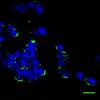
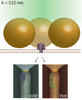
A team of researchers at the National Institute of Standards and Technology (NIST) has shown that by bringing gold nanoparticles close to the dots and using a
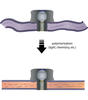
Having blood drawn and analyzed to diagnose disease is a process that can take a few days, but what if your doctor could perform this analysis in moments, right
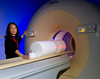
In the United States, about 80 million x-ray computed tomography (CT) scans are made every year – 7 million of them on children – according to the American
Officials and researchers from the University of Maryland (UMD) and the National Institute of Standards and Technology (NIST) gathered on Oct. 25, 2012, to
A research team at the National Institute of Standards and Technology (NIST) has developed a model* for making quantifiable predictions of how a group of cells
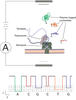
Rapid, accurate genetic sequencing soon may be within reach of every doctor's office if recent research from the National Institute of Standards and Technology
NIST Center for Nanoscale Science and Technology researchers Gregg Gallatin and Andrew Berglund (now at Quantifind in Palo Alto, CA) have determined the optimum
A long-standing mystery in cell biology may be closer to a solution thanks to measurements taken at the National Institute of Standards and Technology (NIST)
The White House has announced that three researchers at the National Institute of Standards and Technology (NIST) will receive the 2011 Presidential Early
Researchers at the Hollings Marine Laboratory (HML) and four partner organizations have measured for the first time concentrations of 13 perfluoroalkyl
Like many new measurement tools, the laser frequency comb seemed at first a curiosity but has found more practical uses than originally imagined. The technique
A powerful color-based imaging technique is making the jump from remote sensing to the operating room—and a team of scientists* at the National Institute of
When it comes to the food used to raise fish in aquaculture "farms," it seems that you may get what you pay for. In a new study,* researchers from the National
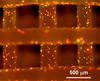
Researchers at the National Institute of Standards and Technology (NIST) have developed a prototype bioreactor—a device for culturing cells to create engineered
A miniature atom-based magnetic sensor developed by the National Institute of Standards and Technology (NIST) has passed an important research milestone by
The National Institute of Standards and Technology (NIST), in cooperation with the Multi-Agency Tissue Engineering Science (MATES) working group, is sponsoring
Researchers at the National Institute of Standards and Technology (NIST) and the University of Massachusetts Amherst (UMass) have provided the first evidence
Why does inhaling anesthetics cause unconsciousness? New insights into this century-and-a-half-old question may spring from research performed at the National
Washington, D.C. – The President's fiscal year (FY) 2013 budget for the Department of Commerce's National Institute of Standards and Technology (NIST) submitted
The great artist and inventor Leonardo da Vinci once said that "simplicity is the ultimate sophistication." National Institute of Standards and Technology (NIST
The National Institute of Standards and Technology (NIST) has announced that it is launching a project to collect and catalog DNA identification data for up to
Individual cells modified to act as sensors using fluorescence are already useful tools in biochemistry, but now they can add good timing to their resumé