

Official websites use .gov
A .gov website belongs to an official government organization in the United States.

Secure .gov websites use HTTPS
A lock (
) or https:// means you’ve safely connected to the .gov website. Share sensitive information only on official, secure websites.


Taking Measure
Just a Standard Blog

Stephanie Servetas is a microbiologist at NIST who studies the gut microbiome.
Editor’s note: This blog post discusses the scientific study of fecal matter (aka poop). If that’s bothersome to you, you might want to skip this one (or at least not read it while eating).
You may have heard about companies that claim they can give you lifestyle advice by analyzing a stool sample, similar to how you can decode your DNA with saliva.
A team of microbiologists at NIST recently put these tests … well … to the test using precisely measured stool samples we already had in our labs.
Microbiome Mysteries
The gut microbiome is a collection of microbes — such as bacteria, fungi and viruses — that live in our gastrointestinal tract. The microbiome can’t be easily checked while it’s inside your body, but it can be analyzed from a stool sample.
It’s important to understand just how challenging it is to learn about a person’s microbiome. You can’t just put a stool sample under a microscope and figure out what’s happening in the body.
The reality is that preparing and studying a sample is a complex, multistep process. At any point, it’s easy to accidentally take a step that might affect the accuracy of your results, which we call introducing bias.
Another significant challenge is that our gut microbiomes are very different from person to person, so there’s no “normal” gut microbiome that scientists have been able to pinpoint. In addition, the microbiome does not exist by itself in your stool — undigested food, bacteria, dead cells and other things also reside in a stool sample.
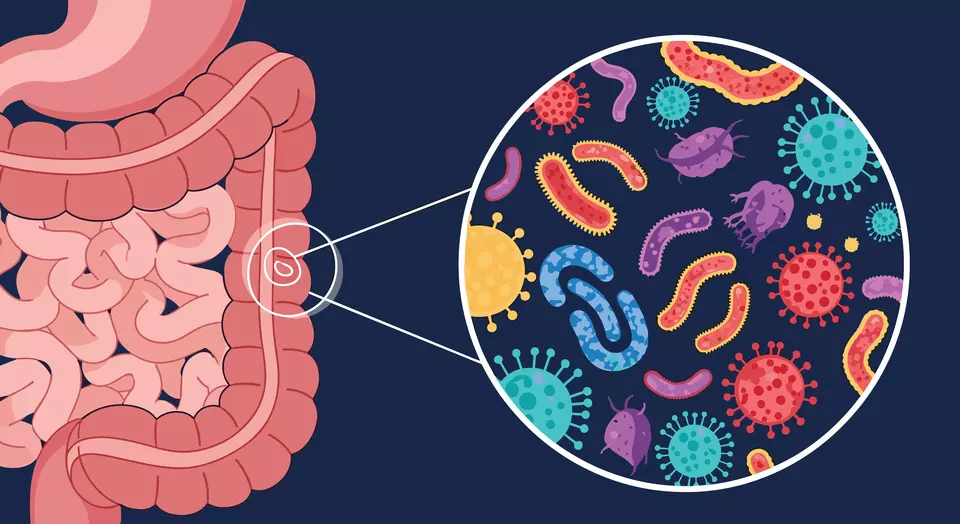
A gut microbiome test is different from a medical test you may be accustomed to, such as a blood test. In an iron blood test, for example, physicians know what they’re looking for and how much they should find. They conduct the test and check if your results fall within a specific range. These tests have existed for many decades, with standardized methodologies for conducting them.
Microbiome science, in contrast, is quite new. The field is only around 20 years old, and there’s still so much that researchers are learning about this complex and interesting part of our bodies. Microbiome researchers don’t have the technology and the research knowledge to say, “Yes, this is 100% what we were expecting to find in your microbiome.”
Testing the Test
In our recent study, we sent identical stool samples from one donor, which we’ve already studied and understand very well, to seven different microbiome test companies. This was an anonymous test, so the companies didn’t know they were being researched.
The results we received were quite different, even though the companies received identical samples. One company, for example, marked a sample as having an “unhealthy” gut microbiome, while none of the other companies did.
The likely reason for this is the bias issue I mentioned above. Different labs are handling samples differently, introducing varying levels of bias.
What Our Results Mean for Consumers
This variability in results doesn’t mean I would advise people not to take these tests. In fact, I may try one myself one day. The reason I haven’t done so yet is simply because, in addition to being a researcher at NIST, I’m a mom of two young children who keep me pretty busy.
When my kids are older, I actually think it might be interesting and fun to have our entire family take one of these tests and see how our gut microbiomes are similar and different, given that we live together and eat a lot of the same foods. (That’s a microbiologist’s idea of fun anyway.)
If you take a test, I encourage you to approach the results you receive with a healthy dose of skepticism.
I also wouldn’t make major lifestyle or dietary changes without consulting your doctor. Your physician knows you, and they can order more scientifically rigorous testing, such as a blood test, if you need more information based on something found in your gut microbiome. As a microbiologist, I generally know how microbes interact with the body but not necessarily how the body responds to microbes. I defer to my doctor’s guidance and would still do so, whatever the results of a microbiome test might tell me.
Standard Reference Fecal Material
You may be wondering why we had precisely measured fecal matter samples available to us in our lab. That’s because NIST produces and sells standard reference fecal material for microbiome research. These reference materials are used to improve our understanding of the medical research behind treatments such as fecal transplants (yes, that is exactly what it sounds like). Fecal transplants have been shown to help treat gut conditions like colitis and, impressively, may also improve patients’ responses to cancer treatment.
When we created this standard reference material, we had leftover samples from individual donors that we didn’t include in the reference material. But we’ve measured the material so thoroughly that it was perfect for this research.
Future Steps in Microbiome Testing Research
For areas such as microbiome research, a key step is to progress the measurement science to better understand where these measurements may be going awry. My group at NIST has been working to understand this complex science for about a decade.
We contacted the companies after our study was completed, and most were happy to work with us on future research. As a result, we are now collaborating with researchers in the microbiome testing field to improve these measurements — and confidence in the results. Our ultimate goal is to help these tests become more like a blood test, so they can potentially be part of your regular health screenings. This could help us all become healthier through personalized medicine.
About the author

Related Posts



Comments
Hello, Deb. While the headline was accurate as written, we’ve updated it based on the feedback provided. The goal of the study is to highlight that you may get different results across tests due to the methods used, rather than differences in biology.
I would have appreciated a comparison with NIST's results, discussing both the similarities and the differences, too.
Click on the link to the actual test study - it's included. It's highly analytical and scientific in nature, and too deep if you are not in the field. I have a scientific background but it was too much for me to make much of it. What you will see is that there is enormous variablity in the tests, which is pretty much what is stated here. Plus the companies are not named, because this is a scientific study and does not want to involve any sort of bias ie which is the best company. Notably, there is no "best" company - they all produce different results.
I agree with Deb! I was really interested in the results of your testing the testers! I felt let down. This article was a waste of time. So was reading it.
I found this article helpful. Health Literacy is something I teach and this article is going to be helpful and (I hope) will improve my communities understanding of health testing options being promoted to consumers.
I would have appreciated a comparison with NIST's results, discussing both the similarities and the differences.
This article was something anyone could put together. Expected more information in this article, especially since the conclusions came from a microbiologist, like specifics/comparisons amongst the seven testing kits.
Like most commenters, I was expecting a comparison of the 7 different testing options. Sharing the conclusion that results varied across the 7, without more detail, really wasn’t that helpful.
People should understand that expecting that sort of information (ie recommendations on specific products or companies) from a government website is unreasonable, primarily for ethical reasons.
Thank you for this study, it reflects what we see from inside the industry too. I work with a gut microbiome testing company based in India, and inter-lab variability is a genuine challenge: differences in DNA extraction kits, 16S vs. shotgun sequencing, reference databases, and even how samples are stabilized during shipping can each shift results. Reference materials like NIST's standard fecal material are exactly what the field needs, and we'd welcome these standardization efforts extending internationally. Until then, your advice is right, a single test result should start a conversation with a clinician, not replace one.
I’m sorry, I agree with many commenters as I was disappointed to read the article. I found no helpful information for my current decision regarding these tests. The best I got out of it is that your company is going to work with other Microbiome companies to hopefully one day have a useful test everyone can take.
Hi, Jenn. Thanks for sharing your feedback. To clarify, NIST is a federal agency, not a company: https://www.nist.gov/about-nist
Everyone has a valid point. I'm a microbiome researcher AND I'm seeking to get a family member's sample tested commercially due to their health concerns. Like others, I came to the site hoping to identify the best company(ies) for this service. I was disappointed. That said, I know that what Dr. Servetas reported in the article is as much as could be said at this time. I wish the field was further along - we need standards and the ability to interpret results. I appreciate NIST leading the charge to advance the field.
Everyone has a valid point. I'm a microbiome researcher AND I'm seeking to get a family member's sample tested commercially due to their health concerns. Like others, I came to the site hoping to identify the best company(ies) for this service. I was disappointed. That said, I know that what Dr. Servetas reported in the article is as much as could be said at this time. I wish the field was further along - we need standards and the ability to interpret results. I appreciate NIST leading the charge to advance the field.
From a Layman’s perspective, I found this Article very interesting and helpful. Im an a Veteran soon to be 83 and have always been Proactive in my Health Care. As such, I will continue to be just as focused on what I can anticipate from the horizon of Medical Research Community; which includes NIST, that will allow myself and others to to maintain our cauthusiam for long and enjoyable life. Personally, I consider NIST one of America’s Better All Around Success Stories.
This is a good article! It tells the people about the current goals of our public research programs. Please continue posting more knowledge.
The draw-me-in headlines was about 7 tests being tested...and yet, NO WHERE in this article are those 7 test mentioned. There is a link to your research, which didn't help. I expected a Consumer Reports type rating on which tests were the closest to the expected results. This really was disappointing, and even the research study didn't mention the tests by name.