Official websites use .gov
A .gov website belongs to an official government organization in the United States.

Secure .gov websites use HTTPS
A lock (
) or https:// means you’ve safely connected to the .gov website. Share sensitive information only on official, secure websites.


Blog Search


Meredith Evans Seeley
Meredith Evans Seeley is a National Research Council postdoctoral fellow and research biologist at NIST. She came to NIST from the Virginia Institute of Marine Science, where she received her Ph.D. in marine science, studying the effects of plastics on marine biota. Meredith’s research aims to better understand legacy and emerging contaminant pollution to help preserve and protect her favorite environment — our oceans.


Murugiah Souppaya
Murugiah Souppaya is a computer scientist in the Computer Security Division of the Information Technology Laboratory at the National Institute of Standards and Technology. He advocates the adoption of modern secure technology by collaborating with industry partners to research, engineer, and build practical cybersecurity solutions, and develop associated guidelines and standards for the various regulated industry sectors and the U.S. Government.


Katarina Cicak
Katarina Cicak is a research scientist in the Applied Physics Division at NIST Boulder. She received a Ph.D. in physics from Cornell University. Her expertise is in innovation, nanofabrication and integration of quantum superconducting devices, including qubits, quantum-efficient amplifiers and optomechanical devices. She joined NIST in 2004.



Peter Trask
Peter Trask is a physical scientist at NIST programming in C, C++, LabView and Matlab. He specializes in working with and programming custom made lab instruments and integrating instrument components for various standard reference materials and research projects. Trask has a bachelor of science degree in electrical engineering from Frostburg State University.



Art Thomas
Art Thomas is the Director of Business Development for the Purdue MEP (Indiana MEP Center), which is part of the MEP National Network™. He has more than 30 years of experience in manufacturing operations leadership roles and helping deliver transformational solutions for product development teams, engineering teams, vendors, IT and more.




Christine McGinn
Christine McGinn is an NRC postdoctoral fellow in the Nanoscale Spectroscopy Group at NIST and a detailee to the CHIPS R&D program as a workforce development liaison. Her research at NIST focuses on spectroscopic and electronic studies of two-dimensional semiconductors and ferroelectric materials. She obtained a Ph.D. in electrical engineering from Columbia University and bachelor’s degrees in physics and engineering from Swarthmore College, where she was also a member of the varsity women’s lacrosse team. When she is not working, she enjoys reading, running marathons, cross stitching, and bingeing TV shows with her husband and cat.
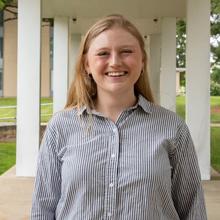



Dr. Lynette Wilcox
Dr. Lynette Wilcox is a Lead Cybersecurity Engineer in the Cyber Infrastructure Protection Innovation Center at the MITRE Corporation. Dr. Wilcox joined MITRE in 2016 upon completing her doctorate in industrial and systems engineering at Virginia Tech. Dr. Wilcox also has a bachelor’s degree in electrical engineering and a master’s degree in industrial and systems engineering, both from Virginia Tech. She is currently focusing research and project work on industrial cybersecurity, specifically in manufacturing environments. While currently working in industry, Dr. Wilcox is a scholar-practitioner who remains passionate about contributing valuable industry insight and perspective to support high quality, accessible engineering education. Additionally, Dr. Wilcox is a certified group fitness instructor, wellness and nutrition coach, and a professional life coach.

Aslam Sherule
Mr. Aslam Sherule is a Lead Cyber Physical Security Engineer at MITRE Corporation. He is a co-author of NIST SP 800-82 R3, NIST SP 1800-10, and NIST CSWP 28. Currently he is working on creating practice guides for Responding to and Recovering from Cyber Attacks and Zero Trust Architecture in OT. His work at MITRE focuses on OT/industrial Internet of Things (IIoT) cybersecurity research and practice.
Prior to joining MITRE, Mr. Sherule was a Senior Security Advisory Consultant at Cisco focusing on OT and IoT cybersecurity practice. During this period, he conducted several security segmentation, risk assessment, and security management program services for clients in the oil and gas, mining, manufacturing, utility, and healthcare verticals. Prior to joining Cisco, Mr. Sherule was the trusted advisor and engagement lead at Verizon for a large utility company covering cybersecurity, machine to machine (M2M)/IoT, networking, cloud, and digital transformation areas. Aslam led the winning proposal for the Smart Grid Cybersecurity proposal for a leading utility company. At Verizon, he served clients in the utility, energy, and manufacturing verticals.
He brings a wealth of skill sets, with over 25 years of experience in the fields of cybersecurity (IT and OT), control systems engineering for energy, utility and manufacturing verticals, enterprise architecture, solutions architecture, software design and development for IT and OT, and product development for M2M/IoT applications over wireless and satellite networks. Mr. Sherule’s broad and deep skill set is backed up by rigorous education from Harvard, Worcester Polytechnic Institute, and the University of Missouri that covers cybersecurity, internet working, control systems/process control, finance, and management topics.

John Hoyt
Mr. John Hoyt is a Principal Industrial Control System Cybersecurity Engineer at the MITRE Corporation. He specializes in cybersecurity for the manufacturing sector as well as other operational technology used in critical infrastructure. Prior to coming to MITRE, Mr. Hoyt spent over 10 years as a systems integrator helping to automate factories producing everything from automobiles to toilet paper. He has a master’s degree in electrical and computer engineering from the University of Maryland and a bachelor of science in electrical engineering from Georgia Institute of Technology.