

Official websites use .gov
A .gov website belongs to an official government organization in the United States.

Secure .gov websites use HTTPS
A lock (
) or https:// means you’ve safely connected to the .gov website. Share sensitive information only on official, secure websites.


Speaker and Panelist Biographies
The speaker and panelist information is in order of appearance following the Agenda. *Keynote speakers* are indicated with asterisks and a blue box. Additional bios coming soon.
*Aaron Miles, White House Office of Science & Technology Policy*
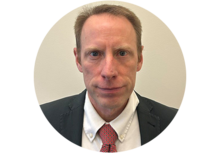
Dr. Aaron Miles is the Coordinator for Strategic Capabilities at the White House Office of Science and Technology Policy, where he leads S&T policy development and coordination across elements of space, nuclear energy, and national security. He previously served as Principal Assistant Director for National Security and International Affairs in that same office, and in senior policy advisor roles in the Department of State and the Office of the Secretary of Defense. Through his policy work and as a research physicist at Lawrence Livermore National Laboratory, Dr. Miles has engaged in a wide range of science and security topics, including nuclear weapons and deterrence, arms control, space policy, fusion and fission energy, plasma physics, astrophysics, research security, and planetary defense.
*Mark Peters, American Nuclear Society*
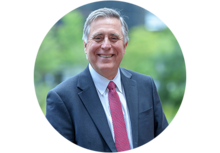
Dr. Mark Peters is the president of the American Nuclear Society.
Dr. Peters is the president and CEO of MITRE, the nonprofit technology company that leads R&D centers around the world. Dr. Peters leads MITRE’s 7,000 employees spanning diverse markets including super intelligence (formerly artificial intelligence), aerospace, telecommunications, homeland security, cyber, transportation, defense and intelligence, health, and government innovation.
An expert in nuclear energy and national security, Dr. Peters spent more than 25 years leading federally funded R&D centers. Before joining MITRE in 2024, he served as the executive vice president for national laboratory management and operations at Battelle Memorial Institute. Prior leadership roles include director of the Idaho National Laboratory and president of Battelle Energy Alliance LLC and associate laboratory director for Energy and Global Security at Argonne National Laboratory.
He is a member of the National Academy of Engineering and the Virginia Academy of Science, Engineering, and Medicine, and serves as President of the American Nuclear Society. He also serves on the Idaho Power Board, Oklo, the National Academies Board on Human-Systems Integration, and several organizations that support innovation and economic development.
*Stacie Williams, United States Space Force*
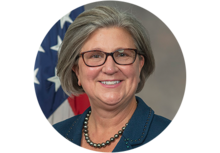
Dr. Stacie Williams, a Senior-Level Executive, is the Chief Science Officer of the United States Space Force (USSF), the Pentagon, Arlington, Virginia. She serves as the central lead for all science and technology matters for an organization that comprises approximately 14,000 space professionals worldwide. In this role, she develops long-term military requirements for the USSF and interacts with other principals, operational commanders, combatant commands, acquisition organizations, and international communities to address cross-organizational science and technical issues and solutions. Dr. Williams represents the USSF science and technology community across the U.S. government, industry, academia, the international community, and other scientific and technology organizations.
Dr. Williams joins Headquarters, USSF from the Air Force Research Laboratory, where she was the space science architect for the Air Force Office of Scientific Research. At AFOSR, Dr. Williams led the basic research investment strategy for space, ensuring that basic science investments effectively met USSF mission needs. In prior assignments, she led AFOSR's remote sensing research portfolio and AFRL's space imaging portfolio. Dr. Williams served as a program manager at the Defense Advanced Research Project Agency Tactical Technology office, where she led a portfolio focusing on remote sensing, small satellite technologies, and high-energy laser detection.
Dr. Williams entered government service in 2011 at AFRL's Directed Energy Directorate and spent several years as the technical advisor at the Air Force Maui Optical and Supercomputing site, leading researchers and operators in developing and transitioning the world's only 24-hour resolved imaging capability, in addition to other space domain awareness technologies.