

Official websites use .gov
A .gov website belongs to an official government organization in the United States.

Secure .gov websites use HTTPS
A lock (
) or https:// means you’ve safely connected to the .gov website. Share sensitive information only on official, secure websites.



The NIST Office of Weights and Measures (OWM) has been working with the International Organization of Legal Metrology (OIML) on developing digitalized documentary standards for legal metrology instruments. The overall vision is to migrate these standards, called Recommendations, from a typical PDF to a format that can be read on digital devices such as tablets and phones, similar to what OWM is doing with the NIST Handbooks. The vision doesn’t stop there, though. OIML will integrate the International Vocabulary of Metrology (VIM), the International Vocabulary of Legal Metrology (VIML), and the SI Digital Reference Point into the Recommendations, so that digital references can be carried and cross-referenced throughout these documents and in subsequent use. In the longer-term, the intention is to work with technical project groups to develop models of measuring instruments, so that specifications can be converted into software parameters that have meaning to machines and can be interpreted by programs. The overall goal is to remove the guesswork from understanding the requirements and move to automated workflows for testing, evaluation, and conformity assessment of these instruments.
The initial pilot project for a digitalized standard is OIML R60 Load Cells. Already, a draft digital version is available. Work is ongoing to receive input from technical experts and participants in the OIML Certification System to understand what aspects of the proposed digital version are necessary and useful. Further work will involve refining the models, which define how the load cells can be tested, and how that can be integrated with other instrumentation.
A pilot site is already “live,” and a framework for developing an extensive digital portal for delivery of OIML products and utilities to people in the legal metrology community is under discussion. OWM is looking at these developments closely, particularly as it relates to standards development work more generally.
OWM Info Hours webinar series has highlighted NIST’s ambitious digital transformation journey to modernize its foundational publications. In the August 2024 session, "Digitalization of NIST Handbooks," OWM introduced its core shift from traditional Microsoft Word authoring to structured XML—a transition akin to moving from fixed page layouts to building with "smart data blocks." While Word files focus strictly on how text looks on a physical page, XML uses "smart labels" behind the scenes to define what text actually means, such as tagging a phrase as a mandatory rule or a specific metric. This approach allows OWM to write content once in a primary file that automatically generates identical web, mobile, and print versions without manual retyping.
Putting these digital authoring principles into practice with complex legal metrology documents offered valuable real-world lessons. Legacy handbooks relied on page-dependent references (such as "see page 42" or "see table below") and reused simple labels like "Table 1" across multiple chapters. In a fluid, scrollable web environment, these traditional habits caused broken hyperlinks, layout errors, and lost visual context. OWM learned that successful digital transformation requires cleaning up document structures before code conversion: vague page references must become explicit section links, generic table names must adopt unique chapter-relative numbers (like "Table 3.1"), and visual charts must be isolated into standalone files with embedded metadata tags.
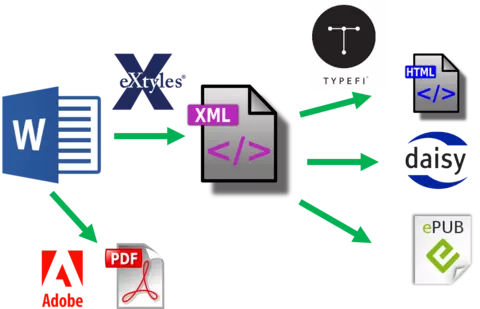
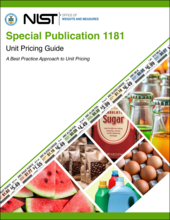
Building on this structural foundation, the May 2026 webinar, "Digitalization of SMART Standards," showcased the next major evolution: moving from basic digital documents to documents that can be read on a multitude of digital platforms. This phase launched with NIST Special Publication 1181 "Unit Pricing Guide," 2025 edition, serving as OWM's pilot digital publication. By demonstrating the power of a single-source XML architecture, SP 1181 proved that a single file could simultaneously deliver dynamic HTML, mobile-friendly EPUB, screen-reader-accessible DAISY XML, and print-ready PDF formats. Moreover, these standards allow field inspection tools, scale management software, and regulatory applications to ingest NIST data directly.
Following the success of the SP 1181 publication, OWM is moving to rapidly expand its digital catalog. NISTIR 7082 "Proficiency Testing Policy and Plan for State Weights and Measures Laboratories," digital 2026 Edition and NIST Handbook 143 "State Weights and Measures Laboratories Program Handbook," 2023 digital Edition are available. Looking ahead, fully accessible digital editions of NISTIR 5672 "Advanced Mass Calibrations," 2019 Edition and NIST Handbook 130 "Uniform Laws and Regulations," 2027 Edition are currently in production and coming soon, bringing the future of documentary standards directly to your screen.