

Official websites use .gov
A .gov website belongs to an official government organization in the United States.

Secure .gov websites use HTTPS
A lock (
) or https:// means you’ve safely connected to the .gov website. Share sensitive information only on official, secure websites.



Building America’s Time Capsule
Two hundred and fifty years is a long time.
That was the first thought that entered Mike Berilla’s mind when he heard the assignment: to build a time capsule that would keep its contents dry and intact for two and a half centuries.
Berilla leads the Fabrication Technology Office at the National Institute of Standards and Technology (NIST). His team builds one-of-a-kind scientific instruments — intricate, beautiful apparatuses of stainless steel and high-vacuum glass — that NIST researchers use to do things like manipulate individual atoms or detect the impact of a single photon of light on a sensor.
“We design and build instruments with extremely demanding engineering requirements,” Berilla said.
So it was natural that America250, the organization charged by Congress to run the time capsule project, came to NIST with this assignment.
The America250 time capsule is built to last. We have done everything to ensure that when future Americans open it in the year 2276, the items inside will be dry and intact.
This is how we built it.
Learn more: Read a Q&A with Michael Berilla and other NIST experts who worked on the time capsule.
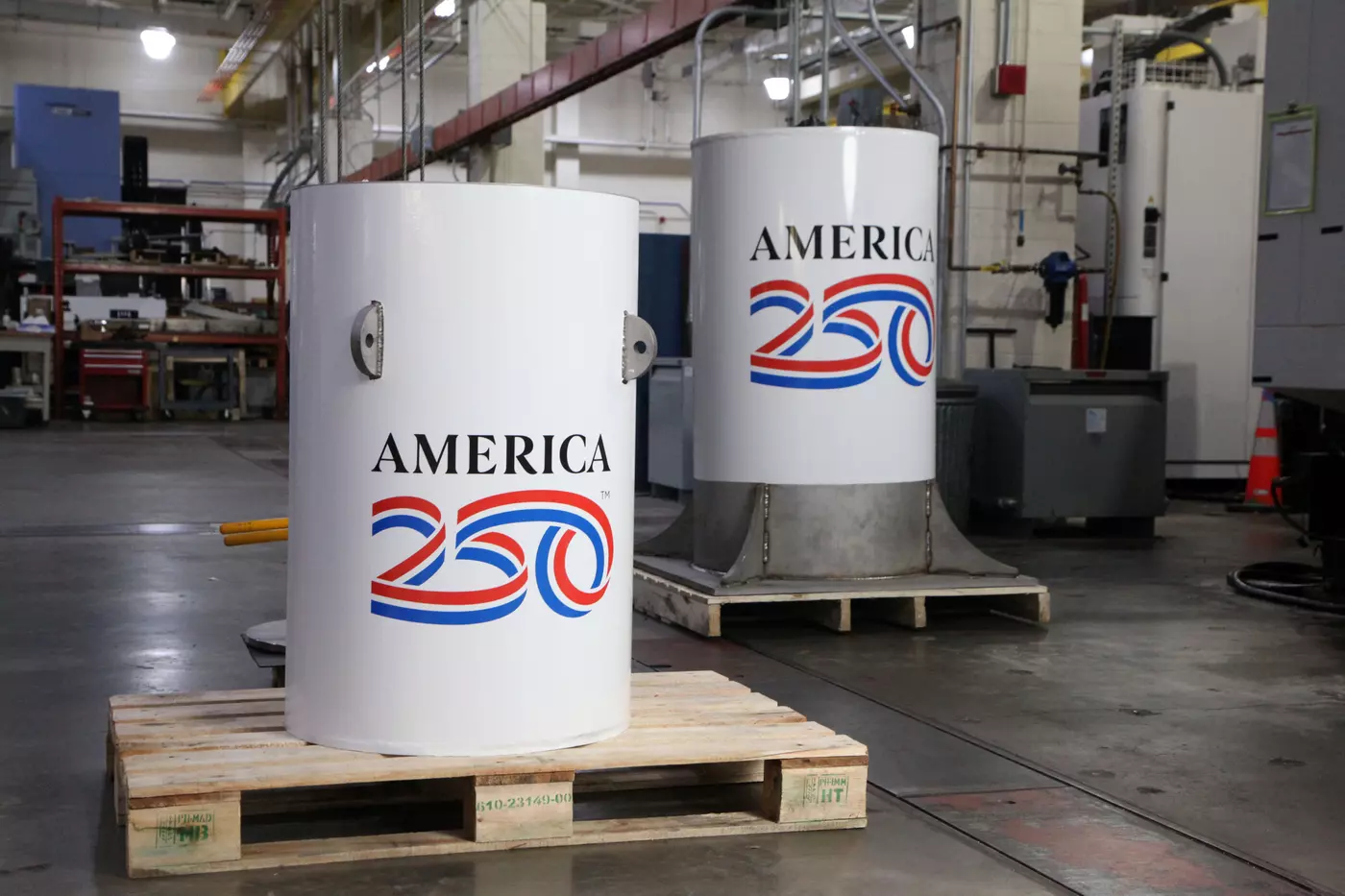
The America250 time capsule assembly includes the time capsule itself, shown here on the left, and a larger bell jar that fits on top of it. Both are precision-milled, stainless-steel cylinders that, combined, weigh roughly one ton. They will be buried together on July 4, 2026, at National Independence Historical Park in Philadelphia, close to the Liberty Bell. The time capsule won’t be opened until the year 2276.
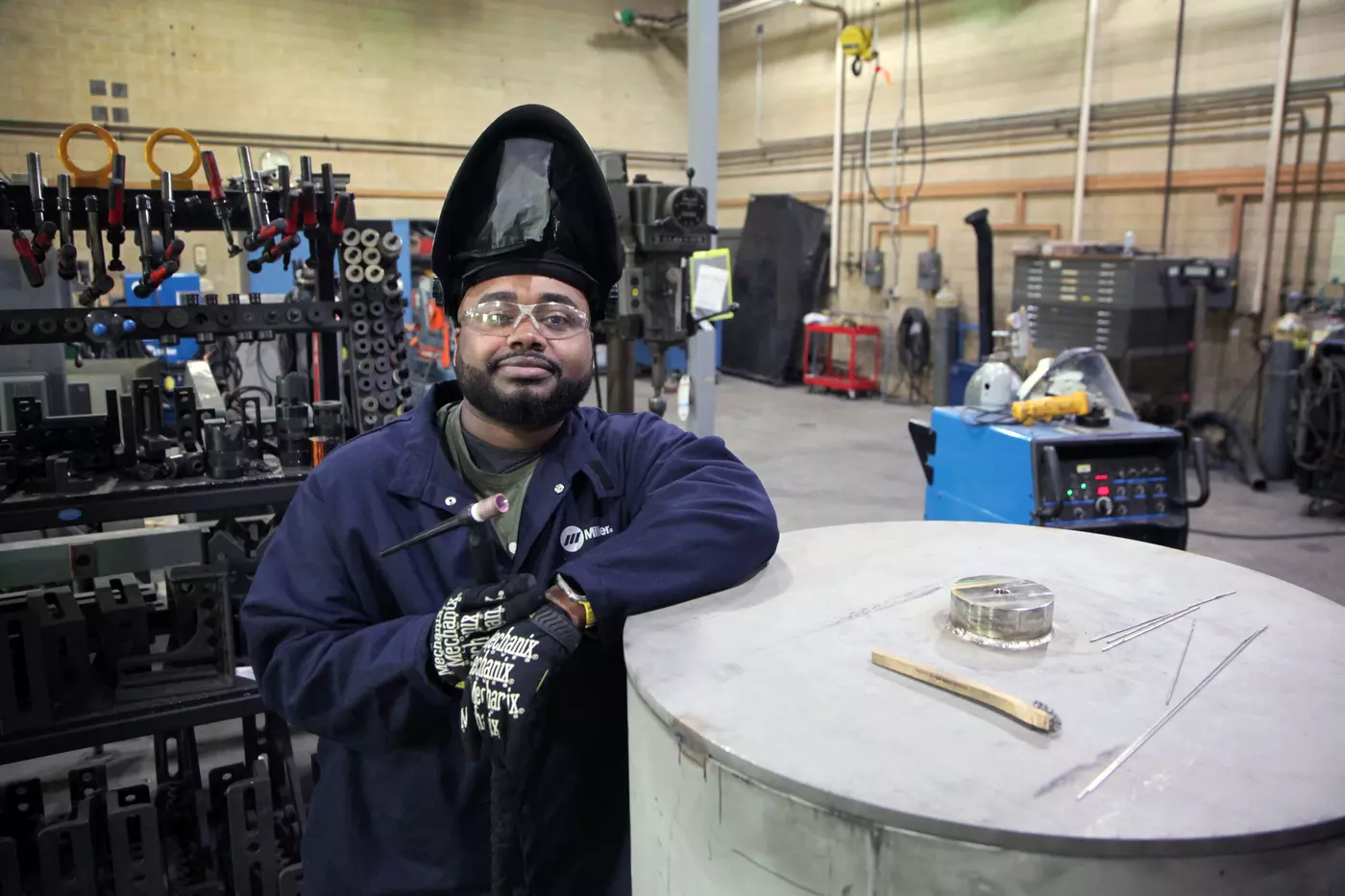
Engineering technician Quonte Little takes a break from welding the bell jar.
The bell jar addresses the main threat to time capsules, which is water. When it is lowered onto the capsule, the bell jar will trap a pocket of air, the same way an inverted bucket traps a pocket of air if you push it down into a swimming pool. If at some point over the next 250 years, floods come or the water table rises, that protective air pocket will continue to surround the time capsule and keep the water away.
“This system doesn’t require pumps or power. It has nothing that can break down,” Berilla said. “We are using simple physics to ensure that the capsule stays dry.”

Mechanical engineer Jay Nanninga designed the time capsule. The engineering drawing he is working on here shows the series of circular shelves that will hold the capsule’s contents.
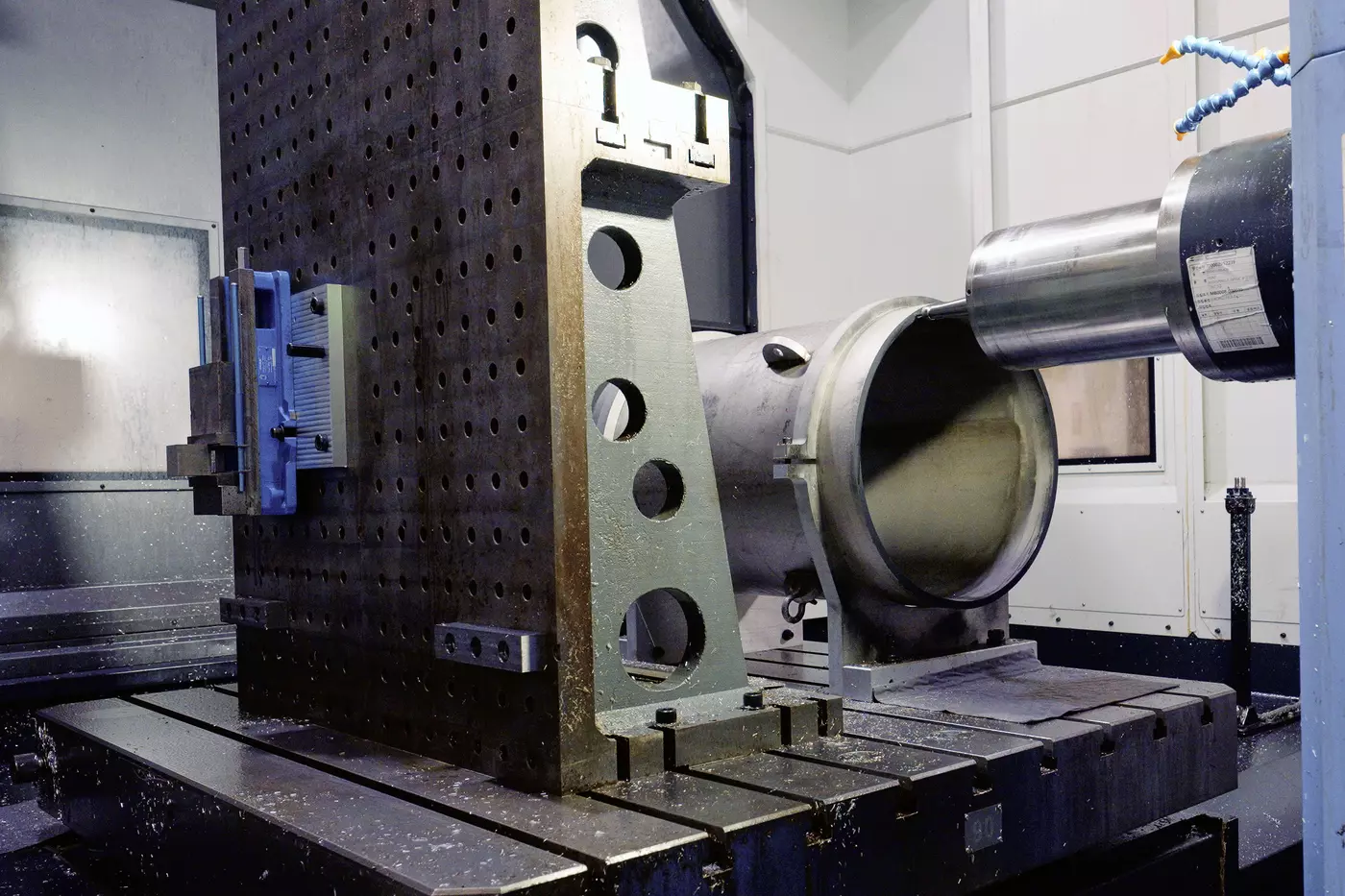
The time capsule sits in the bay of a 4-axis mill — a machine that can move a workpiece in three directions (along the X, Y and Z axes) while also rotating it. As it moves, milling bits carve away metal to form the final shape. This type of machine can produce the solid metal pieces with complex geometries that are often required in the measurement instruments built for NIST scientists.
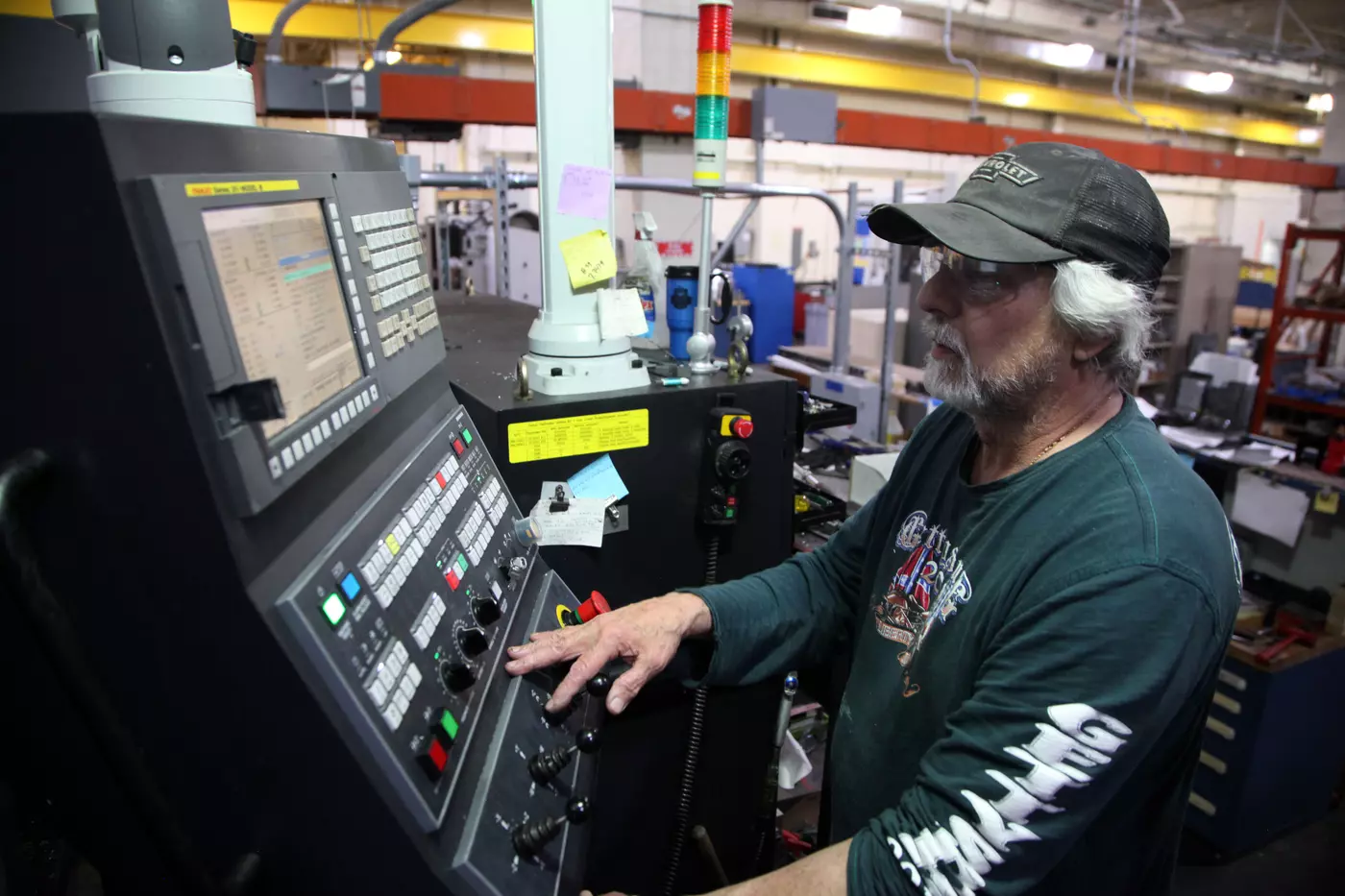
NIST engineering technician Mark Hutton operates the 4-axis mill.
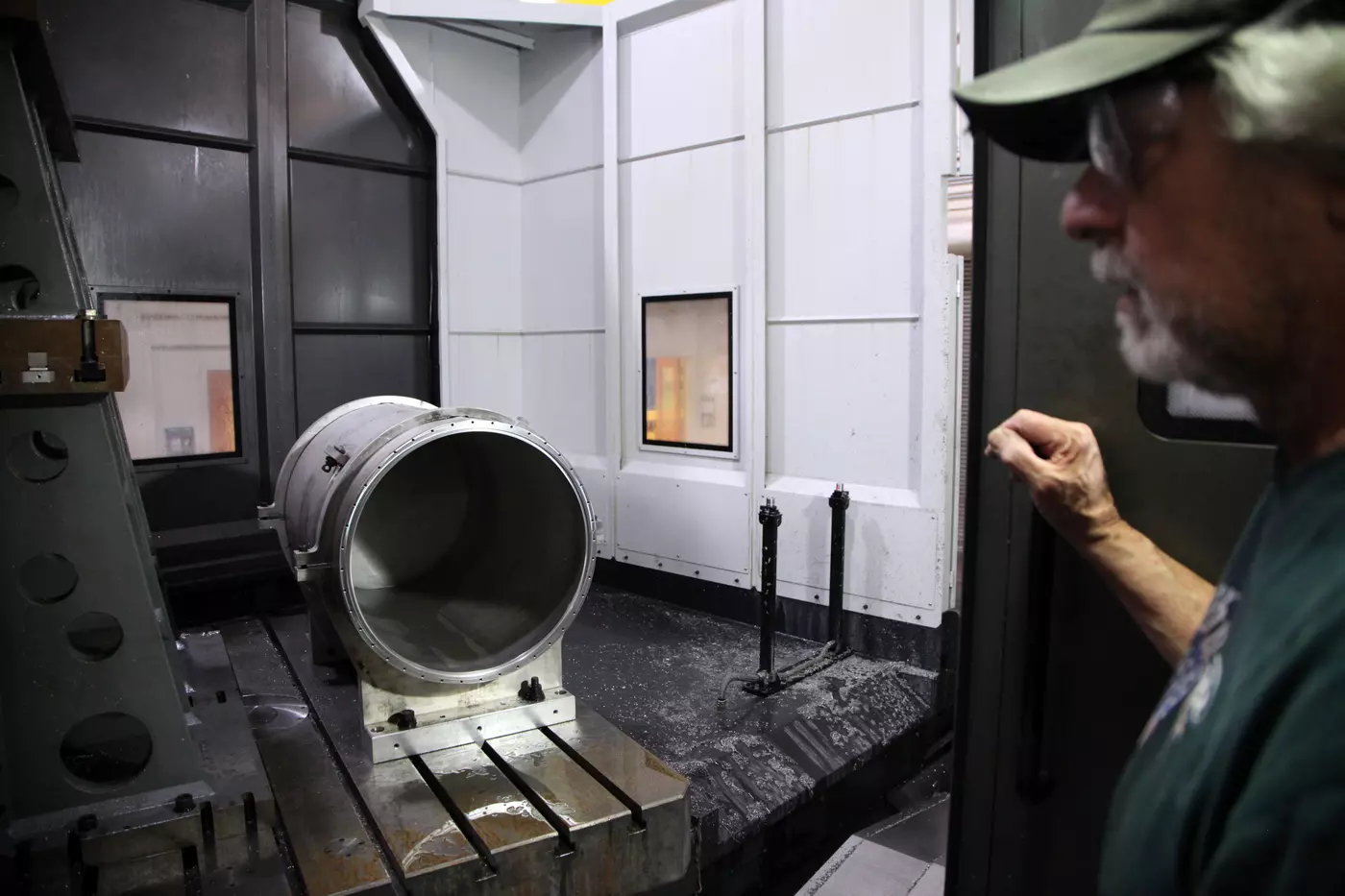
Hutton prepares to enter the machine bed, where the capsule sits in the custom-built saddle that holds it in place while it is being milled.
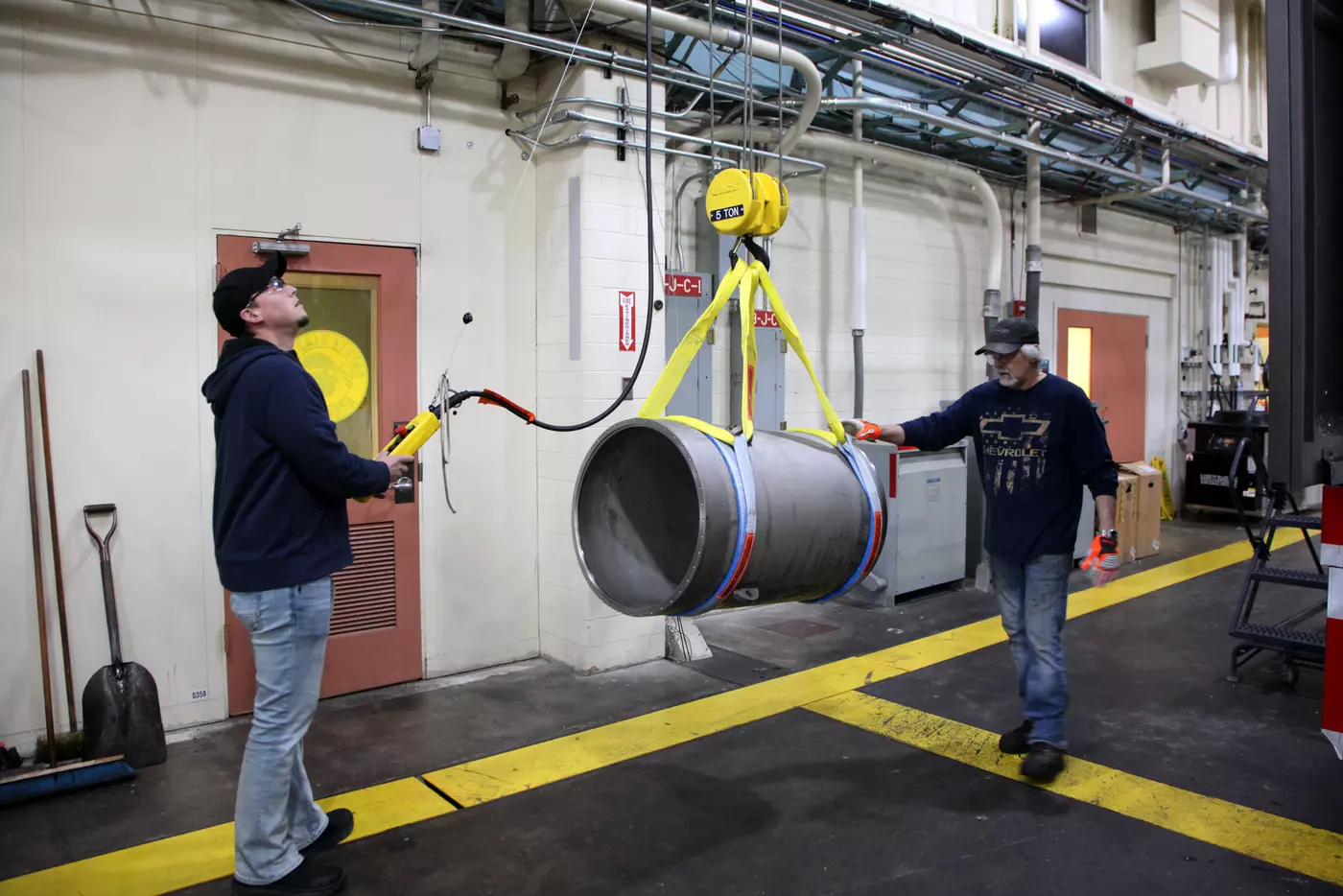
Engineering technician Casey Shatzley (left) and Mark Hutton move the time capsule across the shop floor.
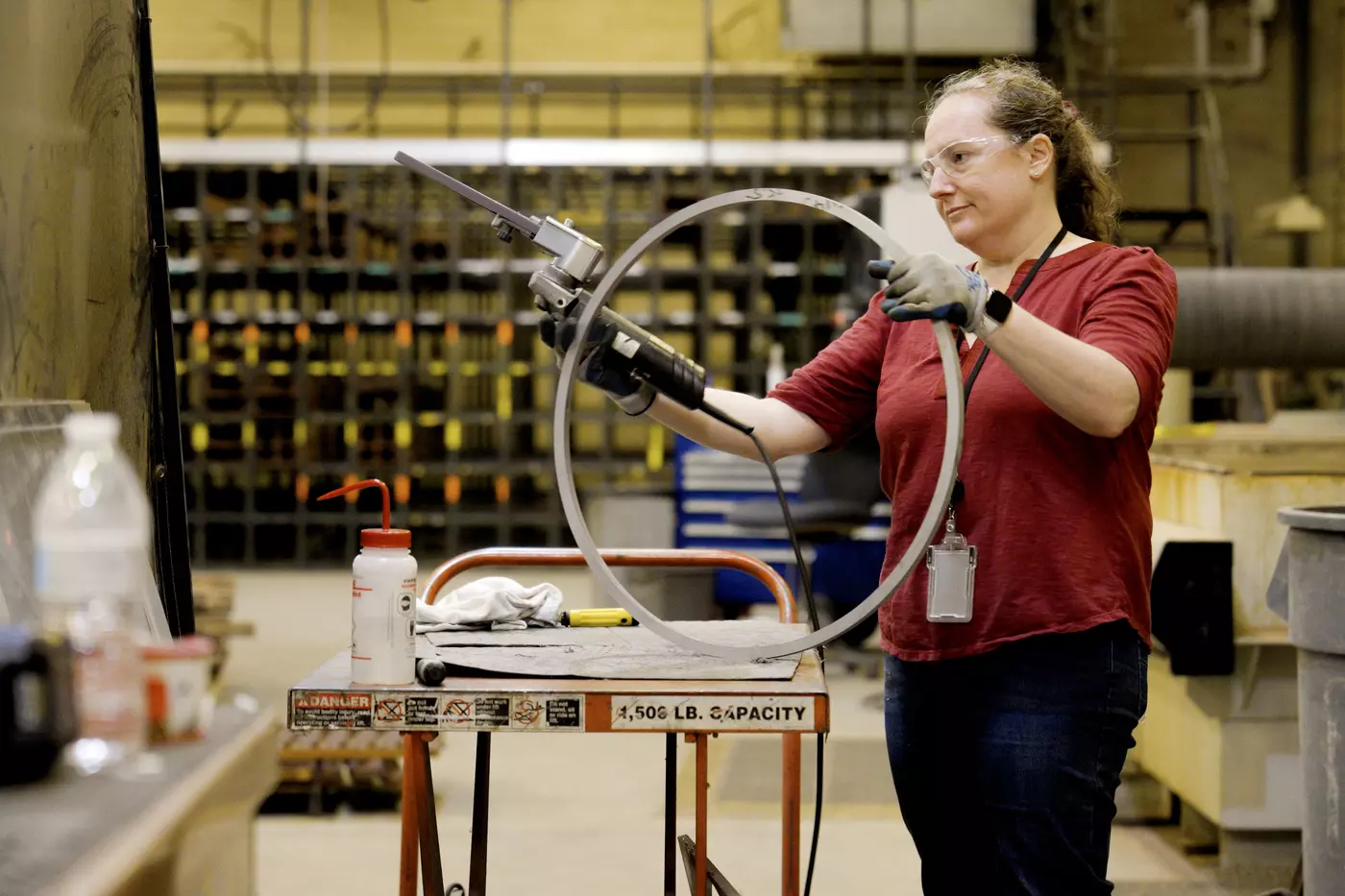
Engineering technician Kristin Lee deburrs a ring to remove its rough edges. This ring will form part of the seal on the top of the time capsule.
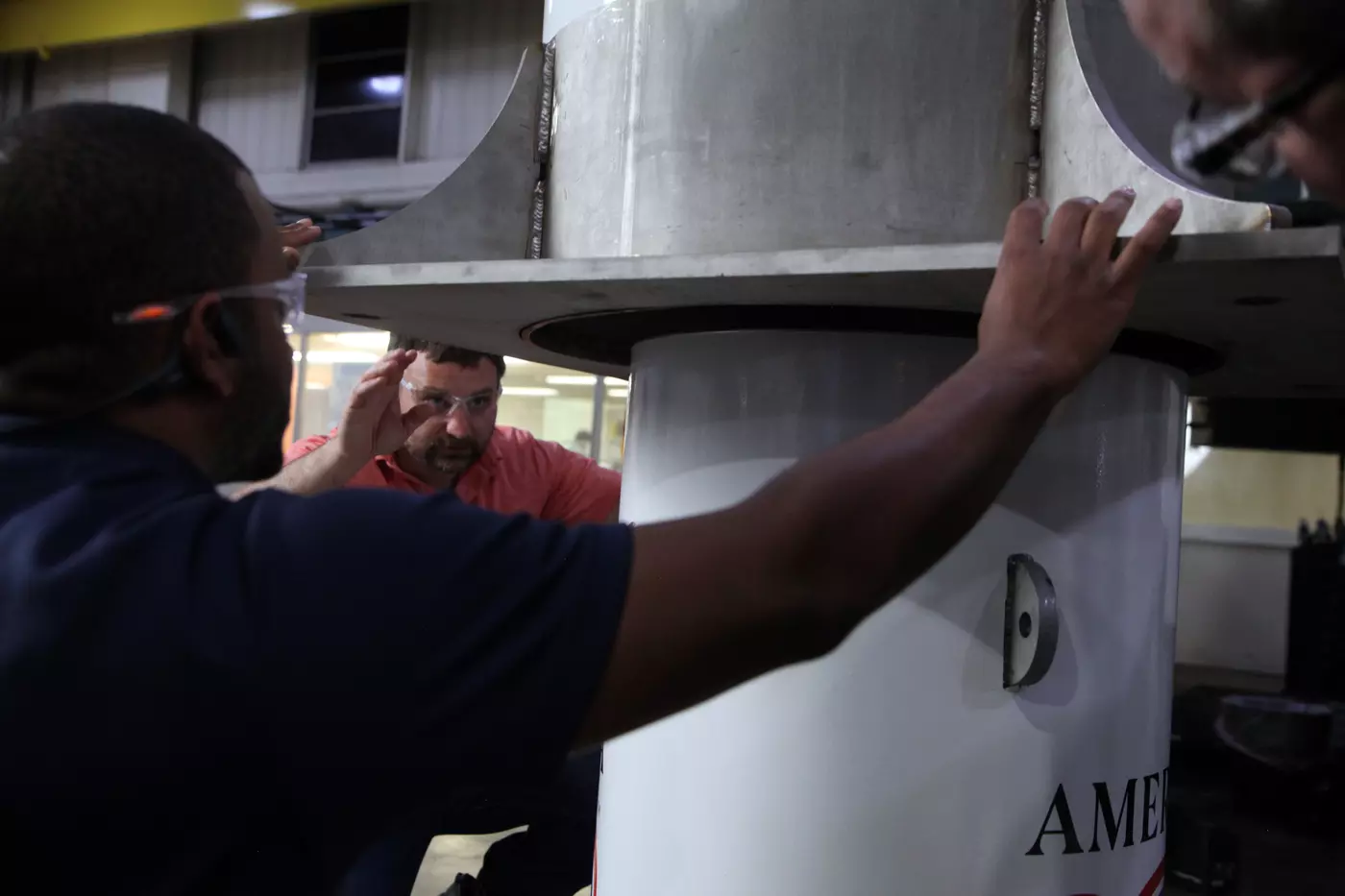
Asia Robertson (left), a supervisory engineering technician, and Mike Berilla, director of NIST’s Fabrication Technology Office, test the fit of the bell jar over the time capsule. The bell jar won’t actually enclose the time capsule until they are buried together in Philadelphia on July 4th.
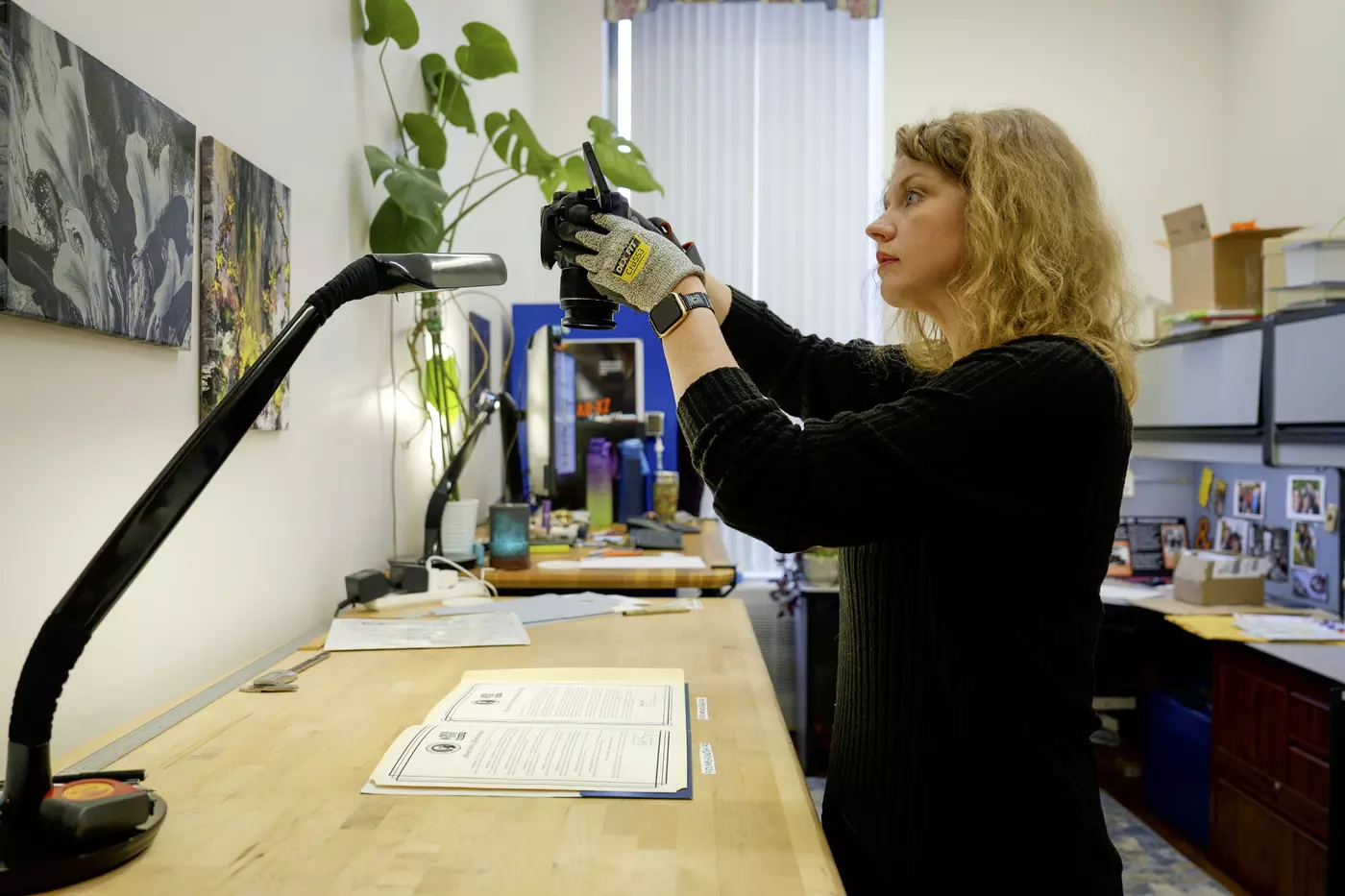
Sarah Reeves, an exhibit specialist at the NIST Research Library and Museum, documents items that have been submitted for inclusion in the time capsule.
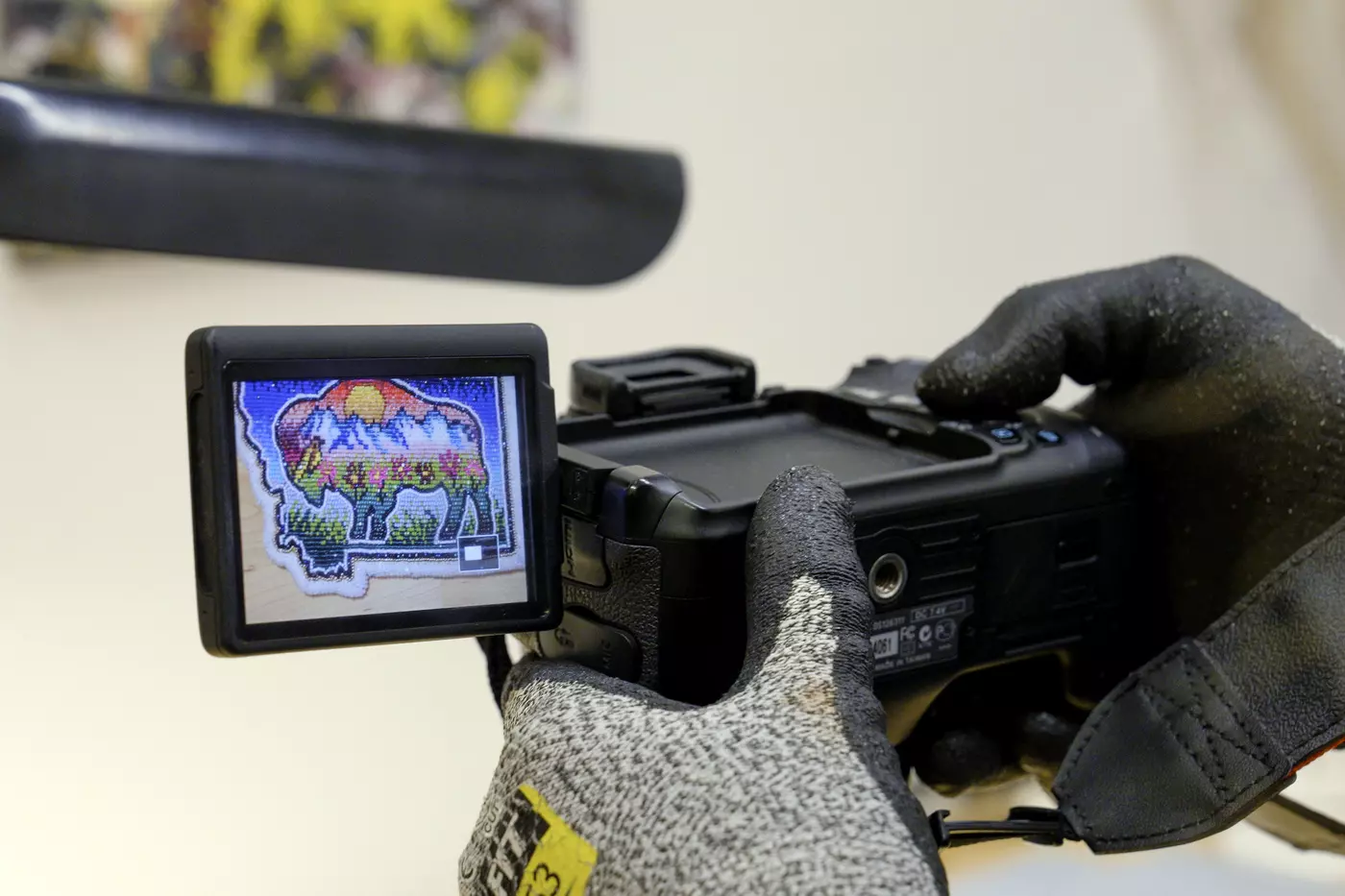
Reeves photographs and documents each item, including this one from the state of Montana.
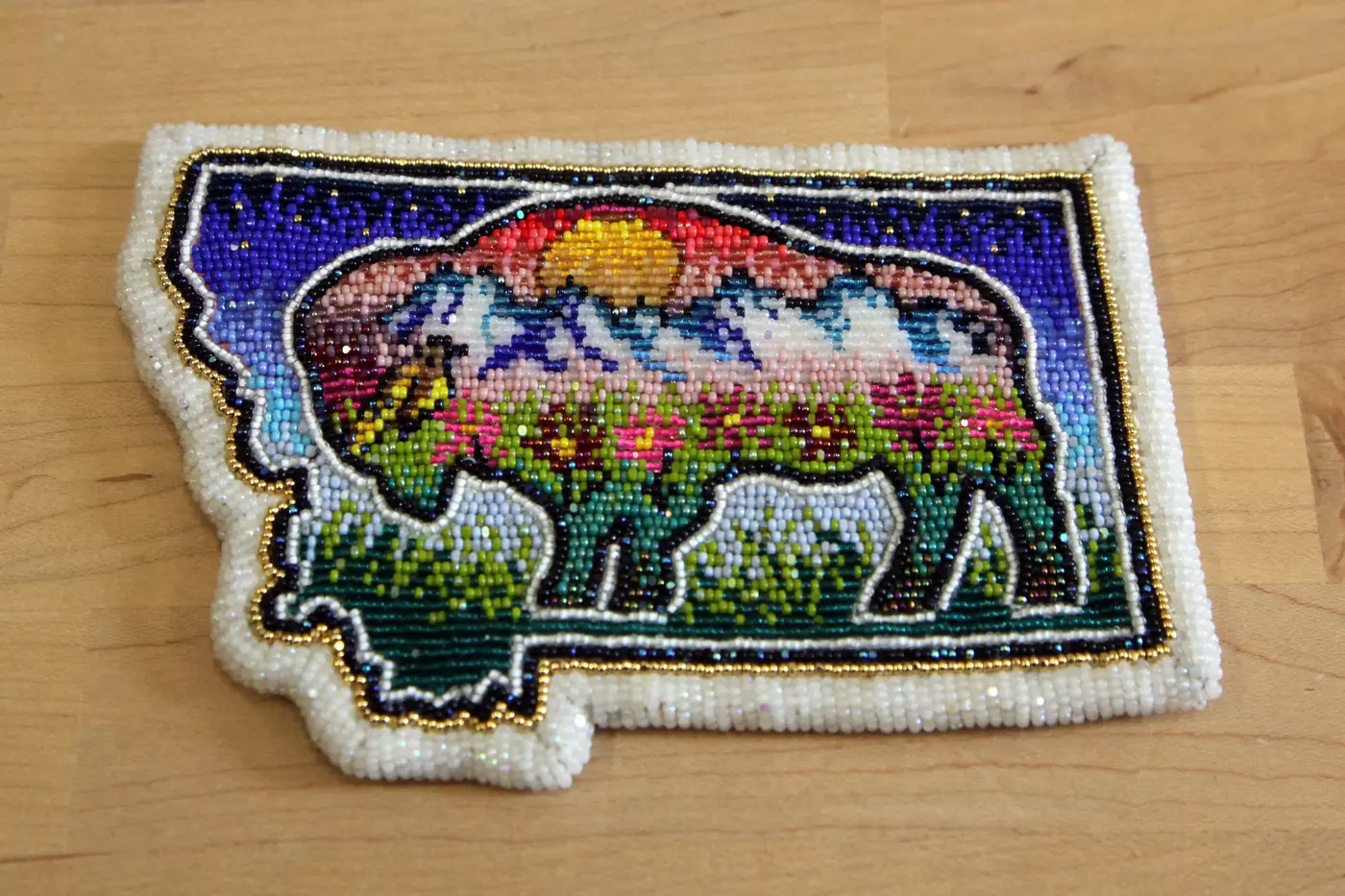
Montana’s submission is a piece of beaded artwork created by a Crow/Hidatsa/Arikara artist to represent the state’s landscapes and cultural heritage. This type of artwork is often made on buffalo hide, but that material would decompose over the course of 250 years. The artist made this piece with a special backing that should not deteriorate over that time period.
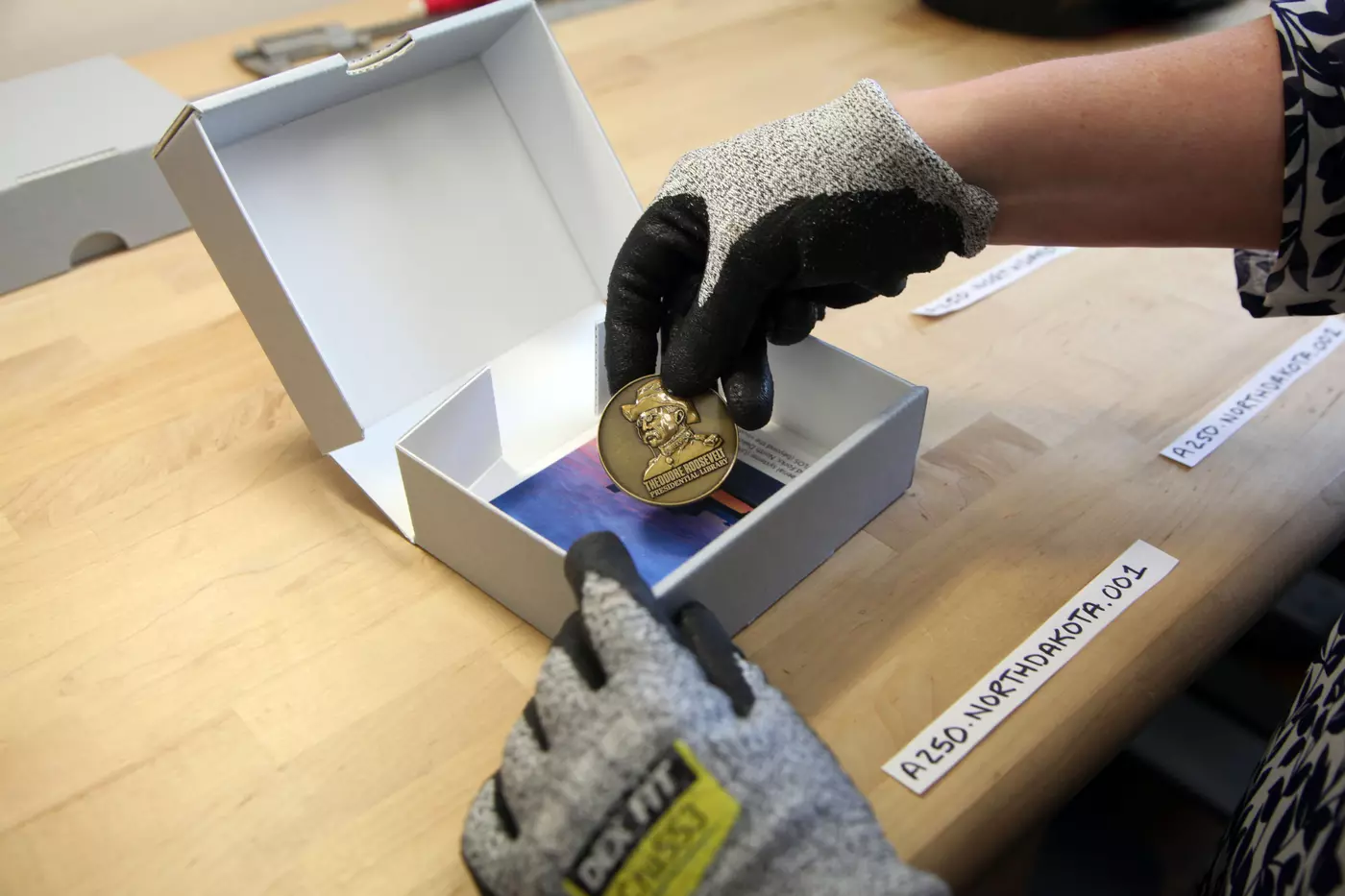
Small pieces are stored in acid-free archival boxes that will be stacked on shelves within the time capsule. Submissions include commemorative coins, like the one shown here from North Dakota, letters from governors, paintings made by young artists, and other artifacts and records that help tell the story of our nation and people. A full list of items included in the time capsule is available on the America250 website.

Loading of the time capsule begins. This inner vessel, designed to hold letters, photographs and paper-based artwork, will sit at the bottom of the time capsule.
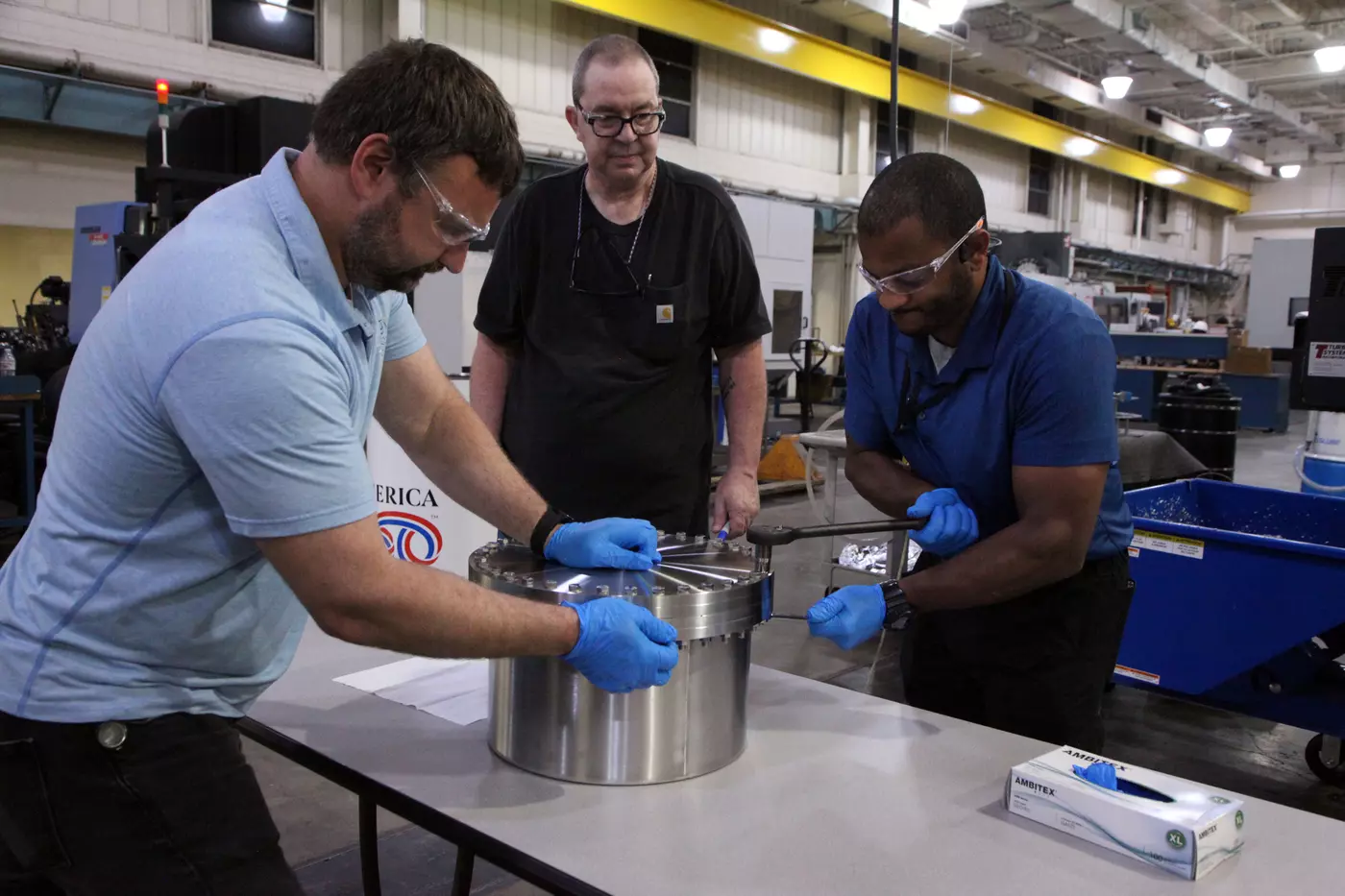
Mike Berilla and Asia Robertson seal the inner vessel by tightening each of its 36 bolts.
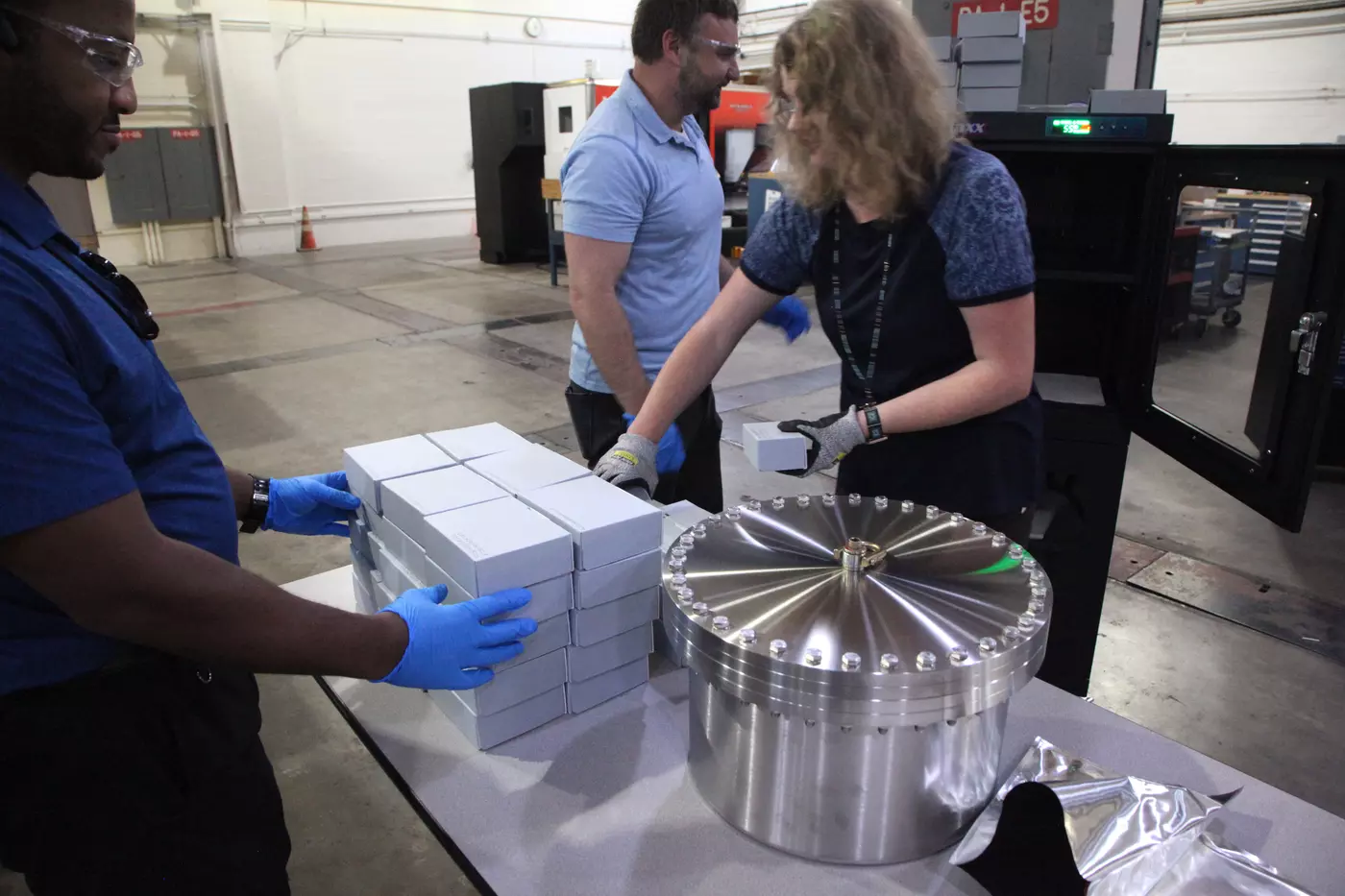
Sarah Reeves removes boxed items from a temperature and humidity-controlled cabinet. To prepare the items for long-term preservation, they were stored at 23 degrees Celsius and 35% relative humidity for at least two days, ensuring that they reached equilibrium at ideal conditions before being sealed away.
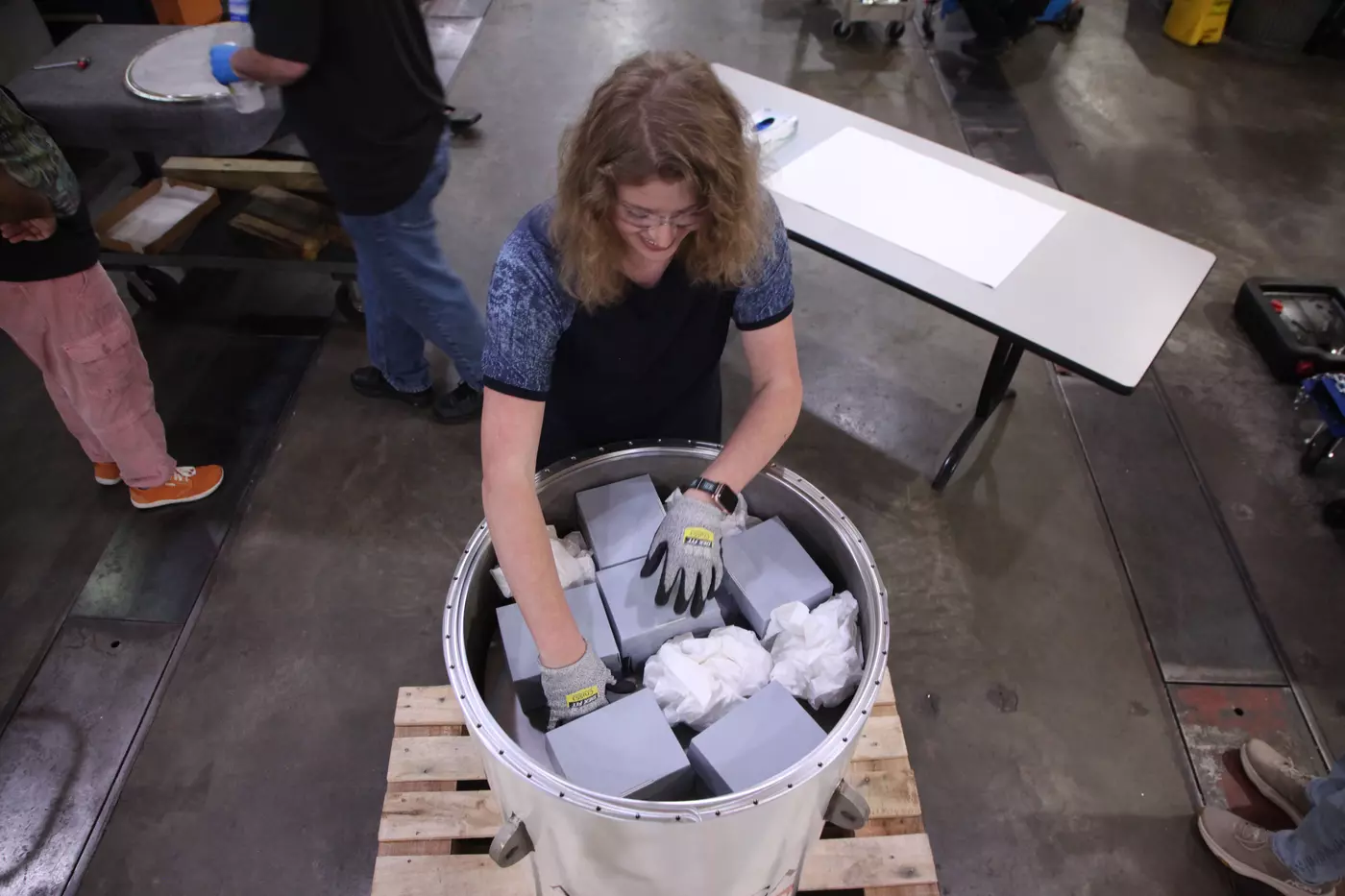
The inner vessel sits at the bottom of the capsule, then a series of round shelves on top of that hold boxed items.
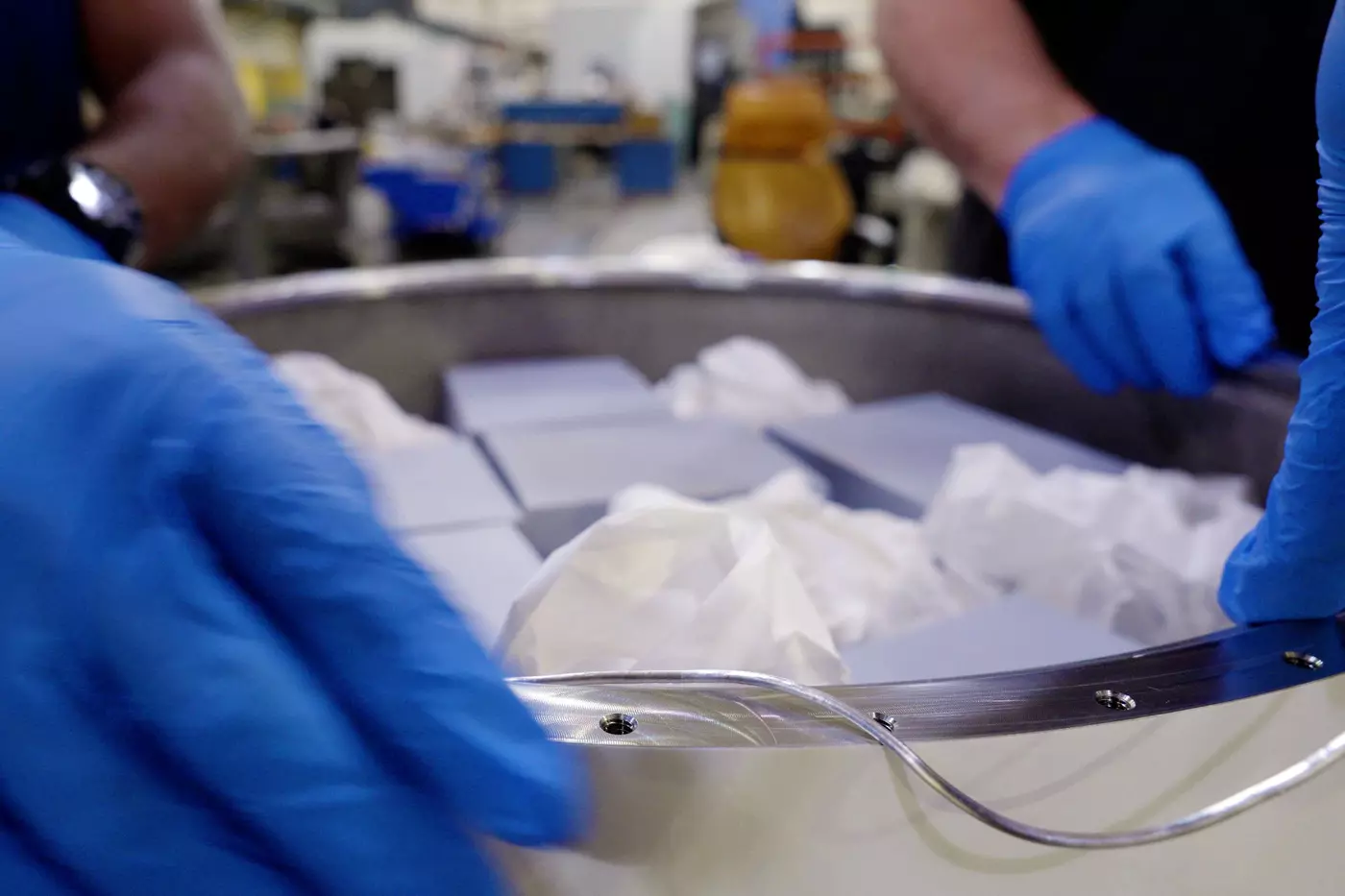
Metal vessels are usually sealed by welding them shut. In this case, though, heat from the welding torch would damage the items inside. Instead, Nanninga designed this capsule with a compression seal made from indium wire, as shown in this image. Indium is a soft metal. When the lid is tightened on top of it, the metal will compress and deform, filling any microscopic imperfections in the sealing ring to create an airtight and watertight seal.
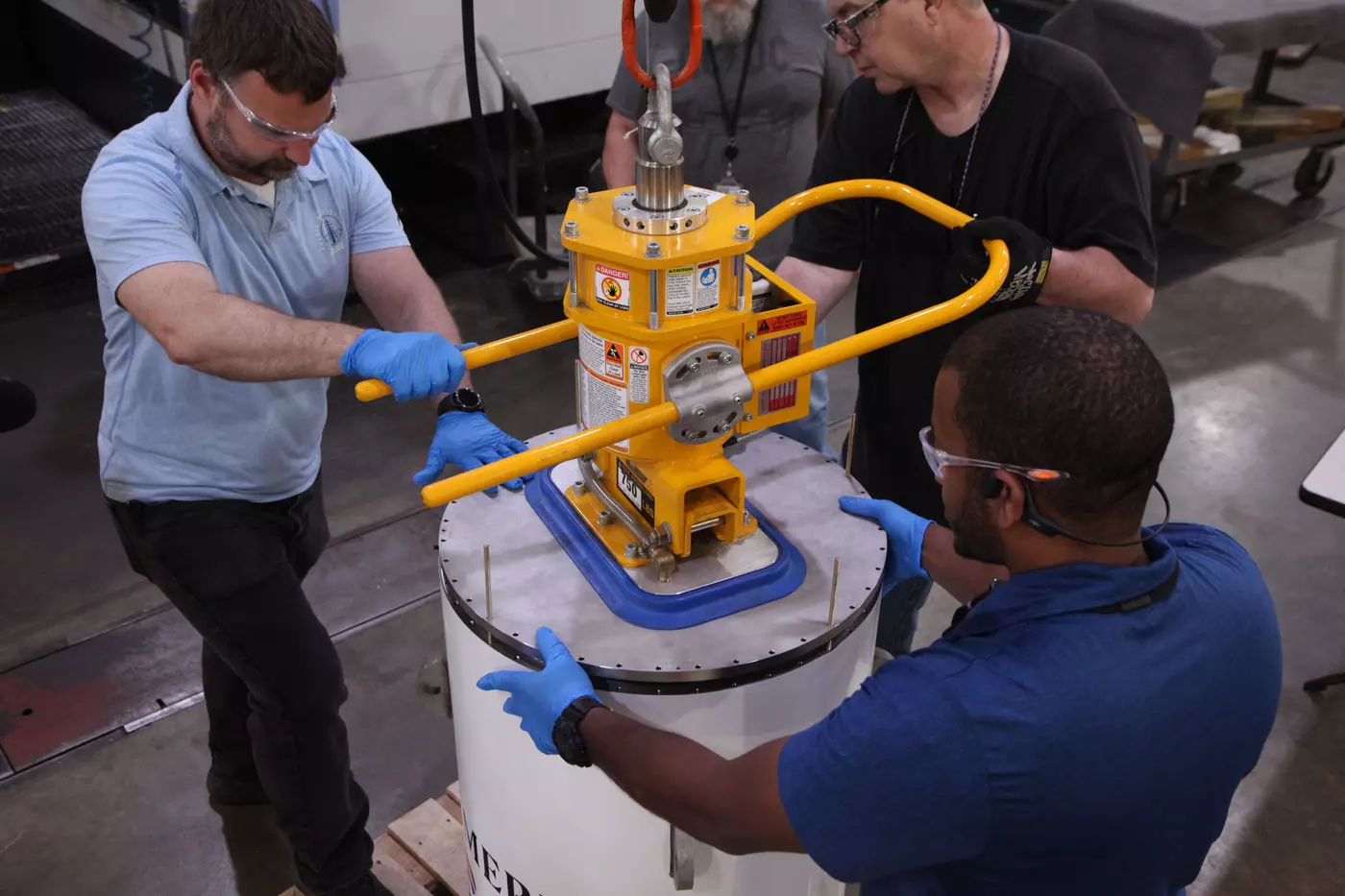
Berilla, Nanninga and Robertson lower the cover, made of 3/4-inch stainless steel, into place.
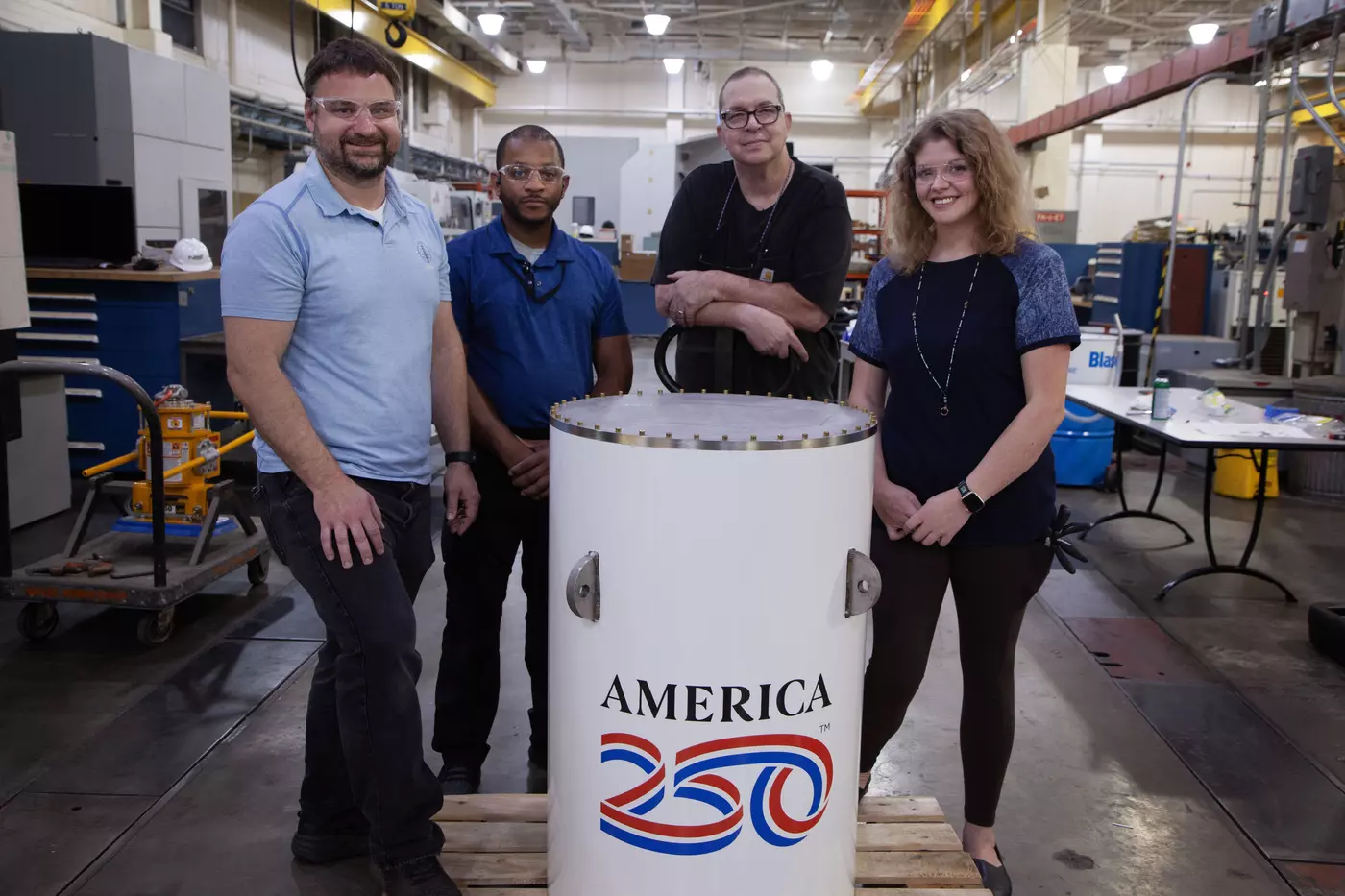
Sealed and ready to ship to Philadelphia.
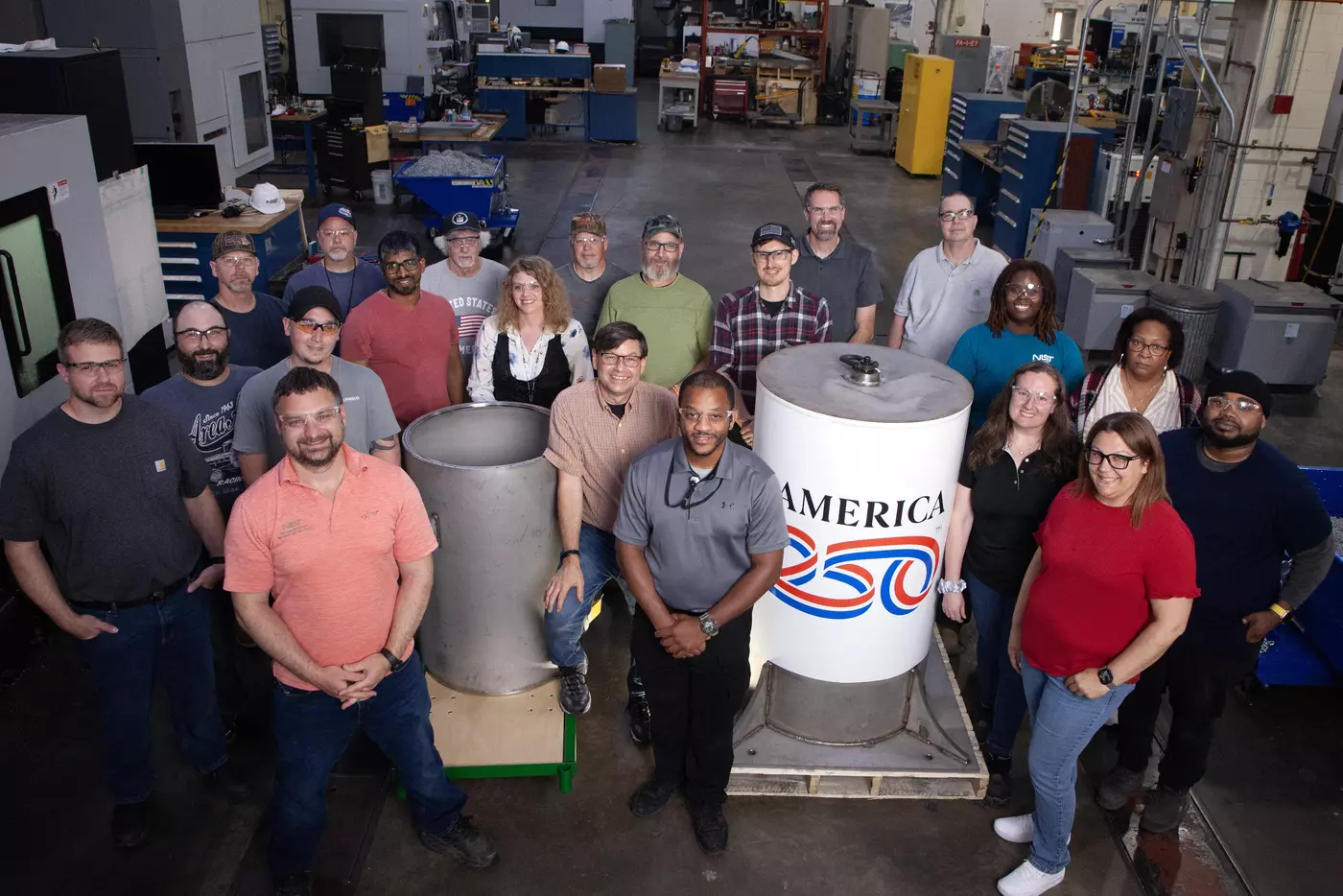
The men and women of NIST who worked on America’s Time Capsule. A print of this photograph on archival paper was included in the time capsule so the people who open it up — probably a crew of engineers and engineering technicians themselves — can see who built it.