

Official websites use .gov
A .gov website belongs to an official government organization in the United States.

Secure .gov websites use HTTPS
A lock (
) or https:// means you’ve safely connected to the .gov website. Share sensitive information only on official, secure websites.


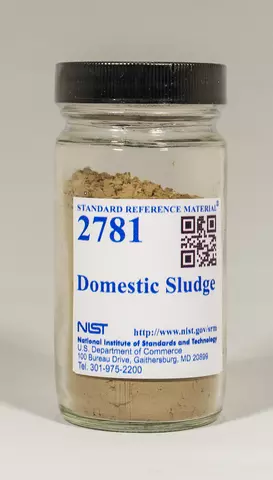
NIST SRM 2781--Domestic sludge.
Domestic sludge is the muck collected at wastewater treatment plants. It can contain all kinds of contaminants, from antibiotics and pesticides to oils and heavy metals.
The sludge in this material was collected from a sewer plant that treats local or domestic waste in Denver, Colorado.
NIST scientists freeze-dried it, ground it into a fine, homogenized powder, and analyzed it to create a standard reference material called NIST SRM 2781 Domestic Sludge.
Why does NIST have it in the first place? Science, obviously.
Once sterilized, domestic sludge can be used as a soil fertilizer. But high concentrations of heavy metals, like lead and arsenic, in domestic sludge can also contaminate soil, potentially impacting the food chain. So, when scientists test their sterilized sludge samples for heavy metals, they need to make sure they’re getting accurate results.
Labs use the SRM for quality control to help make sure heavy metal concentrations fall within established standard levels set by the EPA.