An official website of the United States government
Here’s how you know
Official websites use .gov
A .gov website belongs to an official government organization in the United States.
Secure .gov websites use HTTPS
A lock (
) or https:// means you’ve safely connected to the .gov website. Share sensitive information only on official, secure websites.

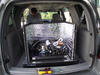
In a step toward taking the most advanced atomic clocks on the road, physicists at the National Institute of Standards and Technology (NIST) have designed and...
Physicist Jun Ye, a Fellow of the National Institute of Standards and Technology (NIST) and a Fellow of JILA, a joint institute of NIST and the University of...
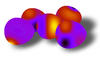
Magnetics researchers at the National Institute of Standards and Technology (NIST) colored lots of eggs recently. Bunnies and children might find the eggs a bit...
Steven Cundiff, a physicist at the National Institute of Standards and Technology (NIST), has received the 2011 William F. Meggers Award from the Optical...
On April 8, 2011, the scientific community will celebrate the centennial of the discovery of superconductivity—the ability of certain materials to conduct...
Researchers at the National Institute of Standards and Technology (NIST) have for the first time used an apparatus that relies on the "noise" of jiggling...
BOULDER, Colo.—Physicists at the National Institute of Standards and Technology (NIST) have demonstrated an electromechanical circuit in which microwaves...
BOULDER, Colo.—Physicists at the National Institute of Standards and Technology (NIST) have for the first time coaxed two atoms in separate locations to take...
Like snowflakes or fingerprints, no two quantum dots are identical. But a new etching method for shaping and positioning these semiconductor nanocrystals might...
The sun is now a significant power source for the National Institute of Standards and Technology (NIST) radio station WWVH, which broadcasts time of day, marine...
A researcher at the National Institute of Standards and Technology (NIST) has invented a method of making high-temperature superconducting (HTS) cables that are...
BOULDER, Colo.—In a paradox typical of the quantum world, JILA scientists have eliminated collisions between atoms in an atomic clock by packing the atoms...
JILA researchers have developed a laser-based source of terahertz radiation that is unusually efficient and less prone to damage than similar systems. The...
Using a new experimental test structure, biophysicists at JILA have unraveled part of a 15-year mystery in the mechanics of DNA—just how the molecule manages to...
The top science news of 2010, as compiled by several science magazines, includes several stories from the National Institute of Standards and Technology (NIST)...
Extending its 26-year tradition of innovative quantum voltage standards, researchers at the National Institute of Standards and Technology (NIST) have begun...
Scientists at JILA and collaborators have demonstrated an improved laser-based "molecular fingerprinting" technique that picks out traces of key hydrogen...
Researchers from the National Institute of Standards and Technology (NIST) and the German national metrology institute have used NIST's miniature atom-based...
Scientists have long known that time passes faster at higher elevations—a curious aspect of Einstein's theories of relativity that previously has been measured...
BOULDER, Colo. – Scientists have known for decades that time passes faster at higher elevations—a curious aspect of Einstein's theories of relativity that...
Physicists at the National Institute of Standards and Technology (NIST) have used a small crystal of ions (electrically charged atoms) to detect forces at the...
Researchers at the National Institute of Standards and Technology (NIST) have created "quantum cats" made of photons (particles of light), boosting prospects...
Harnessing darkness for practical use, researchers at the National Institute of Standards and Technology (NIST) have developed a laser power detector coated...
Purity of ingredients is a constant concern for the semiconductor industry, because a mere trace of contaminants can damage or ruin tiny devices. In a step...
Researchers at the National Institute of Standards and Technology (NIST) have cultivated many thousands of nanocrystals in what looks like a pinscreen or "pin...