

Official websites use .gov
A .gov website belongs to an official government organization in the United States.

Secure .gov websites use HTTPS
A lock (
) or https:// means you’ve safely connected to the .gov website. Share sensitive information only on official, secure websites.


Blog Search


Peter Beaucage
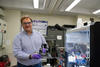
Peter Beaucage is a chemical engineer at NIST, focused on developing automated and autonomous experimental systems for small-angle neutron and X-ray scattering. Peter's Ph.D. in materials science and engineering at Cornell University focused on making superconductors with 3D mesoscale order using block copolymers. Peter is originally from Cincinnati, Ohio, where he received his B.S. in chemical engineering (cum laude) from the University of Cincinnati.
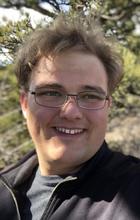




Sikha Pentyala
PhD candidate in in School of Engineering and Technology at the University of Washington Tacoma
Dr. Yi Dong
Lecturer in the Department of Computer Science at the University of Liverpool.
Dr. Xiaowei Huang
Professor in the Department of Computer Science at the University of Liverpool.
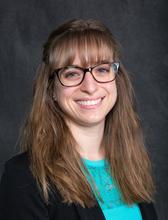
Briana Capistran
Briana Capistran has been a research chemist at NIST since 2021. Her research focuses on the development and optimization of analytical methods and workflows to improve forensic evidence analysis, specifically related to fire debris and seized drugs. Briana earned her Ph.D. in chemistry and M.S. in forensic science from Michigan State University in 2021 and 2020, respectively, and her B.A. in forensic science from Saint Anselm College in 2015. In her spare time, Briana enjoys reading, discovering local coffee shops with her husband, and watching her favorite Friends episodes.
Dietrich Leibfried
Dietrich Leibfried is a NIST Fellow and physicist. He joined the Ion Storage Group at NIST in 1996 as a postdoctoral scholar. After three years as an assistant professor at the University of Innsbruck, Austria (1998-2000), he returned to NIST in 2001 as co-leader of the group working on quantum information processing, quantum networking and quantum control with trapped ions. Dietrich has published more than 160 peer-reviewed articles. He received his diploma (1991) and Ph.D. (1995) in physics while working on precision laser spectroscopy of hydrogen with Theodor W. Hänsch at the Max-Planck Institute for Quantum Optics in Garching, Germany.


