NIST Home > Pollution/Indoor Air Quality Portal 

Pollution/Indoor Air Quality Portal

Programs and Projects
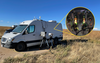
Differential Absorption LIDAR Test Bed Facility for the Detection and Quantification of Greenhouse Gases

We are developing a method for accurately quantifying greenhouse gas emissions from natural and anthropogenic sources and sinks to meet the … more

Monitoring Contaminants in the Arctic and Subarctic Using Banked Seabird Eggs

More than 95% of the seabirds breeding in the continental United States nest at colonies in the Bering and Chukchi seas and Gulf of Alaska. In … more

Measurements and Standards for Contaminants in Biological (Human) Materials

For the past 25 years NIST has developed a number of biological fluid and tissue Standard Reference Materials (SRMs) primarily for clinically … more

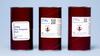
Certification of Three Soil SRMs for Inorganic Environmental Measurements

Analysis of soils for metals and other elements is essential in assessing environmental compliance and the impacts of potentially toxic elements … more

Mercury Vapor Pressure Correlation

An apparent difference between the historical mercury vapor concentration equations used by the mercury atmospheric measurement community and a … more

Standard Reference Materials for Hexavalent Chromium in Contaminated Soil

Significant environmental remediation efforts are being conducted to address the hazards posed by the long-term terrestrial disposal of hexavalent … more

Photomicrograph of ciliate T. pyriformis during cell division with accumulated quantum dots appearing red.

First Test Labs for Next-Generation Internet Protocol (IPv6) Are Accredited

Closeup photomicrograph of rotifer B. calyciflorus (whole organism seen in upper left corner) with quantum dots assimilated from ingested ciliates appearing red.

Closeup photomicrograph of rotifer B. calyciflorus (whole organism seen in upper left corner) with quantum dots assimilated from ingested ciliates appearing red.

Silver nanoswitch: when the voltage between a gold conductor (top) and silver conductor (bottom) exceeds a critical point, silver ions rapidly assemble like a lightning strike to bridge the gap through a organic molecule monolayer.

Silver nanoswitch: when the voltage between a gold conductor (top) and silver conductor (bottom) exceeds a critical point, silver ions rapidly assemble like a lightning strike to bridge the gap through a organic molecule monolayer.

In-depth look: An image of gold atoms on tin from a state-of-the-art scanning electron microscope (left) has relatively poor depth of field - only parts of the image are in sharp focus. By contrast, the entire image from a helium ion microscope image (rig

In-depth look: An image of gold atoms on tin from a state-of-the-art scanning electron microscope (left) has relatively poor depth of field - only parts of the image are in sharp focus. By contrast, the entire image from a helium ion microscope image (rig

Contact

General Information:
301-975-NIST (6478)
inquiries@nist.gov

100 Bureau Drive, Stop 1070
Gaithersburg, MD 20899-1070